


Some places make you want to move the moment you see them. But other places you have to live in anyway. Every year, researchers analyse thousands of UK towns. The same names keep coming up: high crime, empty shops, no jobs. This isn‘t just news. For many, these are the worst places in Britain to live.
This guide looks at the 10 worst towns to live in the UK in 2026. It‘s not to scare you. It’s to help you see, if you live here or plan to move, what you need to watch out for. And what you can actually do to protect yourself and your family.

How We Determine the “Worst” Town
Ranking towns by quality of life is never straightforward. Different people value different things. Researchers rely on measurable factors instead.
Economic Factors
High unemployment, low wages, and young people leaving – these drag everything down. In the Demos-PwC Good Growth for Cities Index 2025, job availability and skills are the heaviest factors. Towns that score low here almost always end up on the “worst” list.
Crime Rates and Safety
Safety remains a primary concern for every resident. Key metrics from the ONS include violent offences, antisocial behaviour, and domestic burglary rates. High crime counts often signal some of the worst towns to live in the UK.
Quality of Living
The Indices of Deprivation 2025 scores more than 33,000 small neighbourhoods across seven areas: income, employment, education, health, crime, housing, and living environment.
Towns with low scores have shorter life expectancies, worse health, and fewer opportunities for young people. Their high streets are often half empty. Parks are neglected. Even buses are rare.
A Look into the Most Dangerous Towns in the UK
Surveying Crime and Safety Issues
Official police data shows crime rates vary significantly between regions. Many communities suffer from elevated antisocial behaviour, shoplifting, and criminal damage.
Impact on Local Communities
Crime doesn’t just hurt victims. It drives away shops. Empty shops become targets for graffiti and smashed windows. House prices drop. Those who can afford to leave do so. The most vulnerable are left behind. In Walsall, residents say it‘s too dangerous to go out at night. One person described it as “like living in a war zone.” That’s not an exaggeration.
The Complete List: Worst Towns to Live in the UK
The table below combines IMD 2025 data, Home Office crime statistics, economic indicators from the Demos-PwC Good Growth Index 2025, and a 2026 Telegraph reader survey to rank the worst towns to live in the UK.
|
Rank |
Town |
Region |
Key Issue |
|
1 |
Walsall |
West Midlands |
Most deprived in UK; crime; empty high street |
|
2 |
Blackpool |
Lancashire |
Most deprived local authority; violent crime |
|
3 |
Middlesbrough |
North Yorkshire |
The highest crime rate outside London |
|
4 |
Slough |
Berkshire |
Low overall appeal ranking |
|
5 |
Northampton |
Northamptonshire |
Poor job market; low appeal |
|
6 |
Telford |
Shropshire |
Economic decline; low appeal |
|
7 |
Birmingham |
West Midlands |
Income deprivation; crime severity |
|
8 |
Bradford |
West Yorkshire |
Crime; deprivation |
|
9 |
Oldham |
Greater Manchester |
Deprivation; low appeal |
|
10 |
Watford |
Hertfordshire |
Lowest appeal rating |
1. Walsall, West Midlands
Walsall is often included in discussions about the worst towns to live in the UK due to a combination of economic challenges, higher-than-average crime levels in some wards, and long-standing deprivation issues. While its location within the West Midlands provides good access to Birmingham and surrounding employment hubs, some residents continue to express concerns about anti-social behaviour, town centre decline, and uneven investment across different communities.
That said, Walsall is far from uniform. Areas benefiting from regeneration projects and improved transport links have seen positive changes in recent years. For homeowners in busier urban neighbourhoods, smart security measures such as an outdoor camera system iegeek S7 24 hour recording camera can help monitor entrances, driveways, and shared access points, particularly during evening hours.
2. Blackpool, Lancashire
Over 40% of Blackpool’s neighbourhoods fall in the most deprived 10% nationally according to IMD 2025. Seven of its neighbourhoods are in the top 10 most deprived in all of England. Ten out of the top 20 most deprived neighbourhoods are in Blackpool. Certain neighbourhoods also experience elevated rates of anti-social behaviour compared with national averages.
Despite these issues, Blackpool continues to receive public and private investment aimed at improving housing, tourism infrastructure, and local employment opportunities. For residents living near busy visitor areas, solar camera solutions can provide additional visibility around homes, garages, and entrances without requiring extensive wiring.

3. Middlesbrough, North Yorkshire
Middlesbrough is often highlighted in national conversations about the worst places to live in the UK. More than 23,000 crimes in a single year. One in six residents was a victim. Although the town has benefited from regeneration and investment in education and business sectors, some areas continue to experience higher unemployment and crime rates than the national average.
Public perception does not always reflect the full picture, however. Many residents praise Middlesbrough's affordability, strong community networks, and access to the North York Moors and North East coastline. For households concerned about property security, modern wireless security camera systems offer flexible monitoring options, particularly in areas where broadband coverage may vary.
4. Slough, Berkshire
Slough‘s problem isn’t poverty. It‘s boredom. It often surprises people when it appears on lists of the worst towns to live in the UK. Economically, it performs relatively well thanks to its strong business presence and proximity to London. However, criticism frequently focuses on congestion, rapid urban development, housing affordability pressures, and perceptions of limited town-centre character compared with neighbouring Berkshire locations.
While crime rates in Slough are generally influenced by its large population and commuter activity, many residential areas remain popular with families and professionals. As property values continue to rise in parts of the town, homeowners increasingly invest in smart home security solutions, including indoor camera systems that provide remote monitoring while commuting or travelling.
5. Northampton, Northamptonshire
Northampton regularly appears in public discussions about challenging UK towns due to concerns around town-centre crime, anti-social behaviour, and pressure on local services caused by rapid population growth. Job opportunities are limited outside the service sector. Crime and antisocial behaviour are rising. Young people are leaving.
At the same time, Northampton benefits from a strategic location between London and the Midlands, attracting businesses and new housing developments. Many neighbourhoods remain attractive to families seeking more affordable property than nearby commuter towns.
Deep Dive: Why These Towns Struggle
The Legacy of Deindustrialisation
These towns were once thriving. Walsall made leather and saddles. Blackpool ran on tourism. Middlesbrough produced steel. Oldham spun cotton.
When UK manufacturing collapsed in the 1970s, everything fell apart. This collapse set the stage for today’s worst towns to live in the UK. Young people left and never came back. Jobs disappeared. Skills became useless. Whole communities were hollowed out.
The Security Infrastructure Gap
Walk through these towns and the same gaps appear. Rear alleys and side passages have almost no lighting. Terraced houses have low fences that are easy to climb. Many homes don‘t even have a basic doorbell camera. Parcels sit on doorsteps with no record of who took them. After dark, side entries are completely blind.

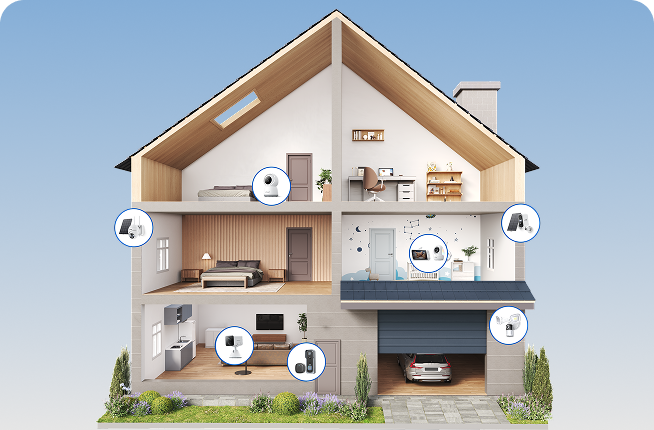
A visible security camera cuts intruder confidence. Smart cameras with motion lights spot intruders early. A small night-vision camera sends an alert when someone approaches after dark.
These devices aren’t luxuries. They fill exactly what these communities lack most: visibility and deterrence.
The Crime-Social Deprivation Cycle
Crime and deprivation don‘t just happen in the same places — they feed each other. High unemployment leads to poverty. Poverty creates desperation. Desperation drives crime. Crime drives away investment. Lack of investment means fewer jobs. The cycle continues.
The Broken Window Effect: Neglected Public Spaces
One broken window stays unfixed. Soon all the windows get broken. Because nobody cares.
Walsall is an example. Graffiti. Fly-tipped rubbish. Boarded-up shops. The council doesn‘t even turn on the fountain. When public spaces fall apart, residents lose pride. People stop using the town centre. Shops close. Communities fall apart.
The government’s Pride in Place programme, announced in March 2025, recognises this connection. But for many towns, the scale of need far exceeds what one funding round can fix.
Future Outlook for the UK's Most Challenging Places
While many of the towns on this list continue to face challenges related to crime, deprivation, housing, and economic opportunity, several are also seeing significant investment aimed at improving long-term quality of life. Being ranked among the worst towns to live in the UK today does not necessarily mean a place will remain that way in the future. Across England, local authorities and central government are investing in regeneration projects designed to attract businesses, improve public spaces, and create stronger communities.
Potential for Development
Several towns on this list have benefited from recent regeneration funding aimed at improving local infrastructure, housing, and public spaces. For example, Blackpool has received funding through neighbourhood improvement programmes, while Walsall continues to progress major town-centre redevelopment projects. These initiatives are designed to encourage investment, create jobs, and improve the overall quality of life for local communities.
Although regeneration takes time to deliver measurable results, such projects often signal a long-term commitment to revitalising areas that have experienced economic or social challenges for many years.
Crime Reduction and Community Safety Improvements
Improving safety remains a priority in many of the UK's most challenging towns. Local councils, police forces, and community organisations continue to invest in crime prevention initiatives, neighbourhood policing, and youth engagement programmes aimed at reducing anti-social behaviour and repeat offending.
Alongside public-sector efforts, many residents are taking a more proactive approach to protecting their homes. Smart security solutions have become increasingly popular for improving visibility around entrances, driveways, and gardens while providing greater peace of mind.
How to Stay Safe and Feel Better in These Towns
Living in a town with high crime and low opportunities doesn‘t mean you have to feel helpless. Here are practical things anyone can do. They don’t cost much.
Start at your own front door
The worst part of a bad area is not knowing what‘s happening outside after dark. A camera with motion-sensor light can make a huge difference. Fit it above your front door or along your side alley.
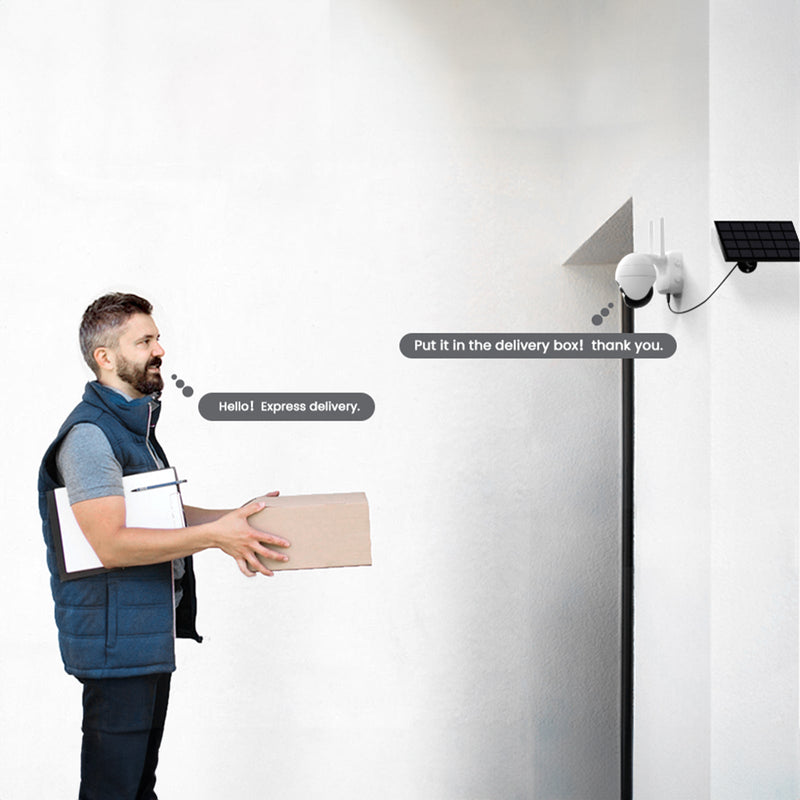
A video doorbell is even better. It shows the visitor on your phone – even from work. Two-way audio lets you talk. Tell a delivery driver to leave a parcel. Or say “not interested” to a stranger. It makes the house feel occupied.
These devices take ten minutes to install on most semi-detached houses or terraces. No tools needed.
Turn neighbours into allies
Feeling alone makes anxiety worse. Take a small step: introduce yourself to the people next door. Swap phone numbers.
Join or start a Neighbourhood Watch scheme. In high-crime areas, these schemes have been shown to cut burglaries and antisocial behaviour. You don‘t need to be a hero. You just need to know who to call when something feels wrong.
Make your home look active
Empty houses attract trouble. When you go away, use a smart plug to turn a lamp or a radio on and off at random times.
An indoor camera SC1 Pro helps too. You can check in through the app. If motion is detected, you get an alert. All of this – light timers, a camera, a doorbell. And data shows that homes with visible cameras and lights are far less likely to be targeted.

Know when to report
Many residents stop reporting crime. “The police won’t do anything.” But in Blackpool‘s Brunswick ward, residents kept reporting antisocial behaviour. Eventually, the police put resources there. Repeat offences dropped from 54 to 18 in one year.
Your one report might be the one that tips the balance. Save the local police non-emergency number in your phone. Keep Neighbourhood Watch notifications on. These small actions add up.
FAQs
Are any of these worst towns improving?
Slowly, yes. Blackpool has received £20 million in funding, and crime has dropped in some targeted areas. But the IMD data shows that 82% of the most deprived neighbourhoods in 2025 were already in that category in 2019. Real change takes years.
Do people still move to these towns?
Absolutely. Affordable housing, employment opportunities, transport links, and proximity to family often attract new residents despite negative perceptions. Many homebuyers and renters choose to offset security concerns by investing in smart security measures.
Are there any success stories in these areas?
Yes. Several UK towns that previously struggled with high crime rates or economic decline have seen significant improvements through local investment and community-led initiatives. As neighbourhoods evolve, smart home security systems such as ieGeek outdoor cameras can help residents feel more confident while communities continue to develop.
Should crime rates be the only factor when choosing where to live?
No. Crime statistics are important, but they should be considered alongside factors such as schools, employment opportunities, transport links, healthcare access, and housing affordability. Even in lower-crime areas, many households choose ieGeek smart security products to add an extra layer of protection and maintain visibility around their homes.
Are the worst towns in the UK improving?
Some are. Government funding, urban regeneration programmes, and private-sector investment have helped improve housing, public spaces, and local economies in a number of historically challenged towns. While progress varies by location, homeowners are increasingly combining community improvements with smart security solutions like ieGeek cameras to better protect their properties.
Conclusion
Living in a high-deprivation area presents real everyday challenges for families, renters, and solo residents. Understanding local crime data and economic trends helps you make informed choices about your living environment. While grand regeneration plans take time, taking practical steps to secure your immediate property brings immediate peace of mind.
Author Intro
|
|
Developed by the ieGeek content team, combining hands-on experience with smart devices and insights into real user needs. ieGeek is widely known for smart security, our solutions are also designed for a variety of real-life scenarios, including travel, outdoor monitoring, pet care, and family safety. We focus on delivering simple, dependable solutions that fit seamlessly into daily life. |