



Key takeaways
-
Megapixel describes how much image detail an IP camera can capture, but it does not guarantee better footage on its own. Lens quality, sensor performance, lighting, and installation position all affect the final result.
-
For many UK homes and small businesses, 3MP to 5MP is often the most practical range. It usually provides a useful balance between clarity, storage use, and network load.
-
Higher resolution helps most when the camera needs to cover a wider area or preserve detail for later zooming. It is less useful if the camera is poorly positioned or used in very low light.
-
Choosing a camera should start with the scene, not the spec sheet. Viewing distance, field of view, storage plan, and night performance matter as much as resolution.
-
Outdoor cameras need more than pixels. Weather resistance, privacy masking, and sensible placement are important for a setup that works well and stays compliant in the UK.
What Is a Megapixel IP Camera?
A megapixel IP camera is a network-connected security camera that captures digital images using a sensor capable of recording millions of pixels. Unlike traditional analogue CCTV systems, IP cameras transmit high-resolution video over a network, making them suitable for remote viewing, intelligent detection and scalable surveillance systems. Understanding what megapixels represent helps you compare cameras more accurately and avoid relying solely on marketing specifications.
What does "megapixel" actually mean?
A megapixel (MP) is a unit of image resolution equal to one million individual pixels. Each pixel records a small piece of visual information, and together these pixels form the complete image captured by the camera. For example, a 2MP camera typically records images at approximately 1920×1080 pixels (Full HD), while a 5MP camera captures significantly more image detail at around 2560×1920 pixels. The higher the resolution, the more information is available when reviewing recorded footage or digitally zooming into a scene.
However, the meaning of megapixel extends beyond simply counting pixels. Higher resolution allows security professionals and property owners to distinguish finer details, such as facial features, vehicle registration plates or small objects that may appear blurred in lower-resolution footage. This additional detail can be valuable when identifying individuals or gathering evidence after an incident. Nevertheless, image quality depends on how effectively the camera converts those pixels into usable visual information, not just how many pixels are available.
Why are IP cameras described by megapixels instead of TV lines?
Before IP technology became the industry standard, analogue CCTV cameras were commonly measured using television lines (TVL), which indicated the horizontal resolution that an analogue camera could produce. While TVL provided a useful comparison for analogue systems, it became less meaningful as surveillance technology shifted towards fully digital imaging.
Modern IP cameras generate digital images directly from their image sensors, making megapixels a far more accurate and universally recognised measurement of resolution. Instead of estimating picture sharpness through analogue signal quality, megapixel ratings specify the actual number of pixels captured in every frame. This standard also aligns with today's high-definition displays, network video recorders (NVRs) and cloud-based surveillance platforms, making it easier to compare cameras across different manufacturers.
As surveillance technology has evolved, modern IP cameras have also introduced intelligent features such as motion detection, human and vehicle recognition, remote access and AI-assisted analytics. These capabilities work alongside image resolution rather than replacing it, allowing users to build surveillance systems that prioritise both image clarity and operational efficiency.

Meaning of Megapixel: Does a Higher Number Always Mean Better Image Quality?
Higher megapixel counts generally provide more image detail, but they do not automatically guarantee clearer surveillance footage. In practice, overall image quality results from the interaction between resolution, sensor performance, lighting conditions and camera configuration. Understanding these relationships helps ensure that your investment delivers practical security benefits rather than simply larger image files.
What do higher megapixels actually improve?
Increasing the resolution of a security camera allows more visual information to be captured within the same field of view. This means subjects remain clearer when footage is enlarged, making it easier to distinguish faces, clothing, licence plates or small objects without excessive pixelation. In environments such as retail premises, office entrances or large driveways, higher-resolution cameras can reduce the need to install multiple devices by covering a wider area while retaining useful levels of detail.
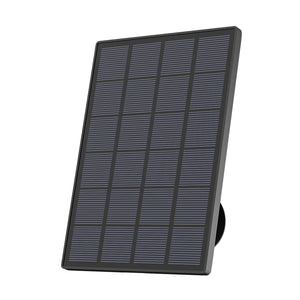
Higher-resolution cameras also improve digital zoom performance. Unlike optical zoom, which relies on lens movement, digital zoom enlarges part of a recorded image. A camera with more pixels retains greater clarity during this process, making post-event investigations more effective. This can be particularly valuable when reviewing incidents where investigators need to examine a specific area of recorded footage after the event has occurred. For larger residential properties, users may also consider installing an ieGeek ZS-GX4S 5MP solar-powered security camera in outdoor locations where running power cables is impractical.

What megapixels cannot improve?
Although higher resolution increases image detail, it cannot compensate for poor capture conditions. A camera installed in inadequate lighting, facing direct sunlight or positioned too far from the target may still produce footage that is unsuitable for identification, regardless of its megapixel rating. Similarly, fast-moving vehicles or people can appear blurred if the camera's shutter speed or frame rate is not appropriate for the environment.
Lens quality also plays a significant role. A high-resolution image captured through a low-quality lens may still lack sharpness because the optical system cannot fully resolve the available detail. Likewise, a small image sensor may introduce digital noise in low-light conditions, reducing the practical benefit of additional pixels. For many real-world installations, a well-designed 4MP camera with a larger sensor can produce clearer night-time footage than an 8MP camera equipped with a smaller sensor and lower-quality optics.
Environmental protection should not be overlooked either. Outdoor cameras exposed to rain, dust and changing weather conditions need appropriate durability to maintain image quality over time. Choosing equipment with a suitable ip67 rating helps protect internal components from moisture and dust ingress, ensuring the camera continues to perform reliably throughout the year. Likewise, selecting the correct camera position and maintaining a clean lens often has a greater impact on image clarity than increasing resolution alone.
Common Megapixel IP Camera Resolutions Explained
There is no single "best" megapixel rating for every surveillance application. The right resolution depends on the area being monitored, the level of detail required and the available network and storage resources. Understanding the strengths and limitations of common megapixel resolutions makes it easier to choose a camera that matches your security objectives without paying for unnecessary performance.
| Resolution | Typical Image Size | Best For | Main Advantages | Considerations |
| 2MP (1080p) | 1920 × 1080 | Flats, indoor rooms, small offices | Affordable, lower storage requirements, smooth streaming | Limited digital zoom and long-distance identification |
| 3MP | 2304 × 1296 | Front doors, gardens, remote sites | Noticeably sharper than Full HD while maintaining efficient storage | Less detail than 5MP or 4K over large areas |
| 4MP | 2560 × 1440 | Driveways, detached homes, small businesses | Good balance between detail and storage efficiency | Requires slightly more bandwidth than 2MP |
| 5MP | Around 2560 × 1920 | Retail shops, larger gardens, car parks | Higher image detail for wider coverage | Increased storage and network demand |
| 8MP (4K) | 3840 × 2160 | Warehouses, commercial premises, evidence capture | Excellent digital zoom and fine detail | Larger file sizes and higher equipment costs |
Among these options, 4MP and 5MP cameras have become popular choices for many UK households because they strike a practical balance between image quality and long-term operating costs. They provide noticeably sharper footage than Full HD while avoiding some of the storage and bandwidth demands associated with 4K systems.
How to Choose the Right Megapixel IP Camera?
Choosing a megapixel IP camera starts with identifying what you need to see rather than how many pixels you can buy. The ideal resolution varies depending on viewing distance, the size of the monitored area and whether the goal is general awareness or detailed identification. Considering each installation individually often delivers better results than using the same camera throughout an entire property.
Front doors
A front entrance usually requires clear identification of visitors at relatively short distances. In most residential settings, a 3MP or 4MP camera provides sufficient detail to recognise faces while keeping storage requirements manageable. The camera should be positioned at an appropriate height to capture facial features rather than the tops of people's heads, and sufficient lighting is essential for maintaining image quality after dark.
Battery-powered and cellular-connected cameras can also simplify installation where running Ethernet cables is difficult. For example, the ieGeek ZY-G1 3MP 4G Wireless Camera offers a practical solution for entrances, gates or holiday properties without fixed broadband, delivering reliable monitoring while maintaining image quality suitable for everyday identification.

Driveways
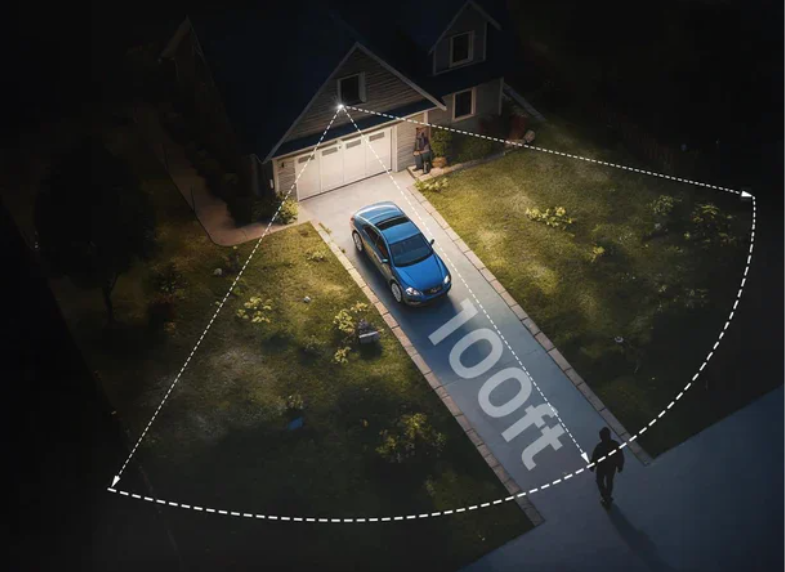
Driveways often present greater challenges because cameras need to monitor both pedestrians and vehicles across a wider area. A 4MP or 5MP camera generally offers enough resolution to identify approaching visitors while providing additional flexibility for digital zoom during playback. If vehicle identification is important, narrowing the camera's field of view usually delivers better results than relying solely on higher resolution.
Properties with larger outdoor areas may also benefit from installing a solar-powered security camera where access to mains electricity is limited. Solar-powered battery cameras reduce installation complexity while maintaining continuous outdoor monitoring throughout the year.
Car parks
Car parks typically require wider coverage than domestic driveways, making resolution selection more important. An ieGeek ZY-C1 5MP camera often provides sufficient image detail to monitor multiple parking spaces while preserving enough clarity for reviewing incidents. Larger commercial sites may benefit from strategically combining several cameras instead of relying on one extremely high-resolution device covering the entire area.
Lighting design is equally important in outdoor parking areas. Even a high-resolution camera can struggle to capture useful evidence if illumination is uneven or vehicles move quickly through poorly lit entrances. Careful placement, supplementary lighting and appropriate frame rates often improve results more effectively than increasing megapixels alone.
Warehouses
Warehouses usually contain long aisles, loading bays and large storage areas that demand broader coverage. In these environments, ieGeek IE82 8MP (4K) cameras can provide valuable additional detail, particularly when reviewing recorded footage or digitally zooming into distant sections of the image. However, deploying multiple lower-resolution cameras in strategic locations may sometimes provide better overall visibility than relying on a single ultra-high-resolution camera.
Warehouse managers should also consider storage infrastructure and network capacity before upgrading resolution across an entire site. Higher-resolution recording significantly increases long-term storage requirements, especially where continuous recording is necessary for operational or compliance purposes.
Small businesses and retail
Retail environments require a balance between customer monitoring, staff safety and stock protection. Cameras positioned above entrances should clearly capture facial details, while wider-angle cameras can monitor aisles, checkout areas and shop floors. The ieGeek S11 4G LTE Cellular Camera can suit sites where cabling is difficult and a fast deployment is more important than a large fixed installation. This makes it a practical option for small business users who want coverage without a heavy infrastructure project.
Modern AI-enabled cameras also improve operational efficiency by distinguishing people from general movement, helping reduce false motion alerts triggered by lighting changes or reflections. When combined with appropriate camera positioning, intelligent detection allows retailers to review incidents more quickly while maintaining accurate surveillance records.
Schools and public buildings
Educational facilities and public buildings often require surveillance systems that balance broad situational awareness with respect for privacy and legal responsibilities. Rather than installing the highest-resolution camera in every location, many organisations combine different resolutions according to risk assessments and operational needs. Entrances, reception areas and vehicle access points typically benefit from higher-resolution cameras, while corridors or communal areas may require lower resolutions to optimise storage efficiency.
Outdoor installations should also be selected with long-term durability in mind. Cameras designed for year-round use should provide appropriate weather protection, while larger sites may benefit from outdoor monitoring cameras capable of covering multiple access routes efficiently. Where wide-area observation is required, a 360 security camera can further reduce blind spots by monitoring larger spaces with fewer devices.

Image Quality Depends on More Than Megapixels
Megapixels are only one element of image quality. While higher resolution provides more detail, the final surveillance footage is equally influenced by hardware design, software processing and installation conditions. Understanding these factors helps you choose a camera that delivers consistently clear footage in real-world environments instead of relying on specifications alone.
Image sensor size
The image sensor is responsible for converting light into digital images. Larger sensors collect more light, which generally results in brighter images, improved colour accuracy and reduced digital noise, particularly during dawn, dusk and night-time recording. This is why two cameras with identical megapixel ratings can perform very differently after dark.
Lens quality
A camera's lens determines how effectively light reaches the sensor and how sharply images are focused. Even with a high-resolution sensor, poor-quality optics can reduce detail through distortion, softness or chromatic aberration around objects. Lens focal length also affects the field of view. Wide-angle lenses are ideal for monitoring large open areas but may reduce the amount of detail captured on distant subjects.
Frame rate
Frame rate refers to the number of images captured each second, measured in frames per second (fps). Higher frame rates create smoother video and improve the likelihood of capturing clear images of moving people or vehicles.
For locations with limited movement, such as gardens or storage rooms, moderate frame rates are usually sufficient. However, entrances, retail premises and vehicle access points often benefit from higher frame rates because fast-moving subjects are less likely to appear blurred.
Video compression
Without compression, high-resolution surveillance footage would require impractically large amounts of storage. Modern codecs such as H.265 reduce file sizes while maintaining good image quality, making higher-resolution recording more practical for both homeowners and businesses. Compression efficiency becomes increasingly important when multiple cameras record continuously or when footage is stored for extended periods.
AI image processing
Many modern IP cameras incorporate AI-assisted image processing to improve picture quality before footage is recorded. Features such as wide dynamic range (WDR), digital noise reduction and intelligent exposure adjustment help maintain clearer images in challenging lighting conditions, including bright sunlight, shadows and night-time environments. AI-powered subject recognition also improves the practical value of surveillance by distinguishing people and vehicles from general motion.
Common Mistakes When Choosing a Megapixel IP Camera
Selecting a security camera based solely on megapixels is one of the most common purchasing mistakes. A well-designed surveillance system considers the entire installation environment rather than focusing on a single specification.
| Mistake | Why it causes problems | Better approach |
| Choosing the highest resolution first | The image may still be poor in low light or at long range | Start with the site and viewing distance |
| Ignoring lens and sensor quality | The footage may look soft or noisy | Check optics and low-light performance |
| Forgetting storage and internet load | Recording may become expensive or unstable | Plan storage before buying |
| Overlooking privacy and compliance | The camera may create avoidable legal or neighbour issues | Limit the field of view and follow UK guidance |
-
Choosing the highest resolution without considering lighting. Poor lighting can limit image quality regardless of how many pixels a camera captures.
-
Ignoring storage and bandwidth requirements. Higher-resolution cameras generate larger files, increasing long-term storage costs and network demand.
-
Using the wrong lens for the viewing distance. A wide-angle lens may cover a larger area but reduce identification detail for distant subjects.
-
Overlooking weather protection. Outdoor cameras should be selected with an appropriate weather-resistance rating to ensure reliable year-round performance.
-
Not checking recorder compatibility. Older NVRs may not support higher-resolution recording or simultaneous playback from multiple cameras.
-
Expecting megapixels to improve night vision. Infrared illumination, sensor size and image processing usually have a greater influence on night-time performance than resolution alone.
A practical approach is to begin by identifying what needs to be recognised—faces, vehicles, deliveries or general activity—and then choose a camera specification that supports that objective. In many situations, careful camera placement and appropriate lighting produce more meaningful improvements than upgrading to a higher megapixel model.
Frequently Asked Questions
What is the meaning of megapixel in security cameras?
A megapixel represents one million pixels that make up a digital image. In security cameras, a higher megapixel count generally means higher image resolution, allowing finer details to be captured. However, image quality also depends on the sensor, lens and lighting conditions.
Is a higher megapixel IP camera always better?
Not necessarily. While higher resolutions capture more detail, they also require more storage, greater bandwidth and compatible recording equipment. A well-positioned 4MP or 5MP camera often provides better overall performance than an 8MP camera installed in poor lighting or with an unsuitable lens.
Is 4MP enough for home security?
Yes. For many UK homes, a 4MP camera offers an excellent balance between image quality, storage efficiency and cost. It is suitable for monitoring entrances, gardens, driveways and other common residential areas while providing sufficient detail for everyday identification.
Should I choose 5MP or 8MP?
The choice depends on your surveillance objectives. A 5MP camera is usually sufficient for homes and small businesses, offering sharp images without excessive storage demands. An 8MP (4K) camera is more suitable for monitoring larger areas or situations where detailed digital zoom is important.
How many megapixels do I need for licence plate recognition?
Do higher megapixel cameras use more storage?
Yes. Higher-resolution cameras generate larger video files because they capture more image data. Storage usage also depends on recording mode, frame rate, compression technology and how long footage is retained.
Does a megapixel IP camera improve night vision?
Higher megapixels alone do not improve night vision. Night-time image quality is primarily influenced by sensor size, infrared illumination, image processing and available light. A camera with a larger sensor may outperform a higher-resolution model in low-light conditions.
Can my existing NVR support higher megapixel cameras?
It depends on the recorder's specifications. Before upgrading, check the maximum supported recording resolution, decoding capability, storage capacity and firmware compatibility. Ensuring that the NVR matches your cameras helps maintain reliable recording and playback performance.
Conclusion
Megapixels remain an important specification when comparing IP security cameras, but they should never be considered in isolation. While higher resolutions provide greater image detail and improved digital zoom, overall surveillance performance depends on a combination of sensor quality, lens design, lighting conditions, frame rate and video compression.
If you are considering upgrading your security system, solutions such as ieGeek's range of battery-powered, 4G and solar-powered cameras provide flexible options for a variety of residential and commercial environments, allowing you to match camera resolution to your property's specific monitoring needs.
Author Intro
 |
Developed by the ieGeek content team, combining hands-on experience with smart devices and insights into real user needs. ieGeek is widely known for smart security, our solutions are also designed for a variety of real-life scenarios, including travel, outdoor monitoring, pet care, and family safety. We focus on delivering simple, dependable solutions that fit seamlessly into daily life. |