



After dark, ordinary cameras often lose the detail needed to identify an intruder. Police recorded burglary in England and Wales fell by 12% to 224,518 offences in the year ending December 2025, according to the Office for National Statistics — still a substantial number that underscores why reliable after-dark monitoring matters. An infrared IR camera fills that gap by using invisible near-infrared light to capture clear footage when visible light fails. For driveways, shops, sheds, and rural outbuildings, that capability can decide whether footage serves as useful evidence or just a dark outline.
An infrared IR camera is designed to overcome these challenges by using infrared illumination to record clear images in low-light or completely dark environments. This guide explains how infrared cameras work, how they compare with thermal imaging, what affects night vision performance and how to select the right solution for residential or business security. Understanding these differences can help you build a more reliable CCTV system and avoid common installation mistakes.
Key Takeaways
-
Infrared IR cameras are night-vision CCTV, not thermal. An infrared IR camera uses near-IR LEDs to capture detailed black-and-white footage in darkness, whereas a thermal camera reads emitted heat. Confirm which type a product actually offers before buying.
-
The word "infrared" is used inconsistently. Near-IR (850–940 nm) powers night vision; long-wave IR powers thermal imaging. Understanding this prevents buying the wrong technology for a UK security need.
-
Claimed range is not identification range. A "30 m" night-vision figure measures IR reach, not face recognition distance; expect usable identification at a fraction of the advertised metres.
-
The IR-cut filter is the day-night switch. It blocks IR by day for accurate colour and lifts at night for clean IR footage; a stuck filter causes pink daytime or dark night-time images.
-
Placement beats megapixels. Clearing walls, eaves, and glass prevents IR glare and reflection — the most common cause of unusable night footage — and is easier than re-mounting later.
-
Off-grid sites have wire-free options. For UK locations without power or Wi-Fi, 4G solar cameras deliver IR night vision and motion alerts without any cabling.

What Is an Infrared IR Camera?
An infrared IR camera is a CCTV camera that uses built-in near-infrared LEDs to illuminate a scene in the dark, producing black-and-white footage that keeps faces, clothing, and detail visible when ordinary cameras see nothing. The term is often confused with "thermal camera," so the first step is understanding what each name actually means.
| Feature | Standard Security Camera | Infrared IR Camera |
| Night recording capability | Limited without additional lighting | Designed for low-light and dark environments |
| Additional lighting required | Often needed | Uses built-in infrared LEDs |
| Image colour at night | Usually unavailable in darkness | Typically switches to black-and-white night vision |
| Suitable locations | Well-lit areas | Entrances, gardens, driveways and remote areas |
| Visibility in complete darkness | Poor | Available with IR illumination |
Infrared Camera, IR Camera, and Thermal Camera — What Each Term Really Means
In UK security, "IR camera" and "infrared camera" almost always mean the same thing: a night-vision CCTV camera with near-IR LEDs around the lens that captures reflected infrared light, just as a normal camera captures visible light, and outputs a familiar black-and-white image at night. A thermal camera, by contrast, detects heat emitted by objects rather than reflected light, producing a colour temperature map instead of a recognisable picture — so it suits detection, not identification. Knowing this difference up front stops you buying the wrong technology for a night vision camera requirement.
Why "Infrared" Describes Two Very Different Cameras
The confusion exists because "infrared" covers a broad band of the spectrum. Near-infrared, used by night-vision CCTV, sits just beyond visible light at roughly 850–940 nm, while long-wave infrared, used by thermal cameras, lies further along at around 7.5–14 μm — both technically "infrared," which is why different industries use the word differently. For a property owner choosing outdoor monitoring cameras, the relevant type is almost always the near-IR night-vision camera, since it gives the detail needed for evidence; thermal remains a specialist tool for perimeter detection, wildlife, or search.
How Does an Infrared Camera Work at Night?
Infrared cameras are widely used for night-time security because they can maintain surveillance when natural light disappears. The key component behind this capability is the combination of infrared LEDs, image sensors and automatic switching technology. Understanding how these components work together helps property owners make better decisions when choosing CCTV equipment.
Near-IR Illumination and the Night-Vision Image
When ambient light drops below a set threshold, the IR LEDs switch on and illuminate the scene with near-infrared light at 850 nm or 940 nm. Invisible to the human eye, this light does not disturb neighbours or reveal the camera's position, yet the image sensor — typically a CMOS chip with the IR-cut filter removed — records it clearly. The result is sharp black-and-white footage preserving facial features, clothing, vehicle shape, and sometimes number plates within range. Unlike thermal heat maps, near-IR footage resembles ordinary CCTV, making it far more useful as evidence.
The IR-Cut Filter: How Cameras Switch Between Day and Night
During daylight, infrared light would distort colour accuracy — turning foliage pink and skin tones grey — so an IR-cut filter blocks it from the sensor. At night the filter lifts (mechanical versions) or switches off (electronic versions), letting the sensor capture the IR LEDs' illumination for a clean night image. This switching is why one device can deliver accurate daytime colour and usable night footage. If the filter sticks or fails, daytime footage turns pinkish or night footage stays dark — a common fault to check before assuming the camera is defective.
850nm vs 940nm IR LEDs — Visible Glow vs Covert Surveillance
850 nm LEDs are brighter and give a longer effective range, but emit a faint red glow visible to anyone looking directly at the camera at night. They suit overt installations where the camera's presence acts as a deterrent, such as a driveway or shop front. 940 nm LEDs produce no visible glow, making them fully covert — ideal for discreet surveillance of a garden, alley, or side entrance where you do not want to advertise the camera. The trade-off is shorter range and slightly higher cost, so they suit shorter-distance covert use rather than wide-area perimeter coverage.

Infrared IR Cameras vs Thermal Cameras: The Key Difference
The core distinction is simple: an infrared IR camera sees reflected near-IR light and produces recognisable detail, while a thermal camera sees emitted heat and produces a temperature map. For most UK security applications, infrared wins because identification — not just detection — is what makes footage useful as evidence.
Reflected Light vs Emitted Heat
An infrared IR camera works like a normal camera with its own invisible torch: the LEDs provide light, objects reflect it, and the sensor records a picture with fine detail. A thermal camera needs no light source because every object above absolute zero emits infrared energy proportional to its temperature, which the sensor reads as a heat map. That lets thermal detect a person in total darkness, fog, or smoke where an IR camera struggles — but it cannot show a face, clothing, or a number plate. For evidence-grade footage, reflected-light infrared is the practical choice, with thermal reserved for detection-only roles.
Where Each Belongs
Infrared suits homes, shops, offices, and small commercial sites where the goal is recognising faces, vehicles, and activity with footage that holds up if shared with police or insurers, while thermal suits large perimeters, rural estates, wildlife monitoring, and search work where detecting a presence matters more than identifying it. Because most UK property owners need identifiable footage rather than heat detection, infrared dominates domestic and small-business CCTV; thermal remains valuable but niche, often used alongside infrared on sites that can justify the higher cost.
| Feature | Infrared IR Camera | Thermal Camera |
| What it sees | Reflected near-IR light | Emitted heat |
|
Main purpose
|
Visual security monitoring
|
Heat detection
|
| Image output | Black-and-white night footage | Colour temperature map |
| Light needed | Needs its own IR LEDs | None — works in total darkness |
| Through glass | Daylight yes; built-in IR reflects off windows | No (glass blocks long-wave IR) |
| Best for | Identification & evidence | Detection only |
| Performance in fog/smoke | Reduced clarity | More robust |
| Typical cost | Lower | Higher |
|
Typical users
|
Homes, shops, offices, CCTV systems
|
Industrial, specialist security, inspection
|
What to Look For When Choosing an Infrared IR Camera
Choosing well means looking past the headline "night vision range" to the specifications that actually determine usable night footage. Effective range, sensor size, field of view, weatherproofing, and power options each affect whether a camera performs in real UK conditions, so it pays to understand them first.
Effective IR Range vs the "Metres" on the Box
Manufacturers quote IR range in metres, but this usually means the maximum distance the LEDs' light reaches — not the distance at which you can identify a face. Security professionals separate this into detection (something is there), recognition (it is a person), and identification (recognising features), and each shrinks dramatically as distance grows. A camera advertised as "30 m night vision" may detect movement at 30 m but only allow identification at 8–10 m. For doorways, driveways, and gardens, a realistic identification range of 10–15 m is usually enough.
Sensor Size, Resolution, and Lux Rating
A larger sensor captures more light, giving better night footage before IR even activates, while higher resolution preserves identification detail when you zoom into recordings, and a lower lux rating means better low-light performance. Rather than fixating on megapixels alone, consider sensor size, resolution, and lux together — a 5MP camera with a good sensor often outperforms an 8MP camera with a cheap one. This is also why a well-specified motion sensitive camera captures usable detail the moment movement triggers, rather than a blurred frame.
Field of View, Beam Angle, and Coverage
The IR beam angle should roughly match the lens field of view so the illuminated area covers what the camera sees. A narrow beam with a wide lens leaves dark corners, while a wide beam with a narrow lens wastes IR light and shortens effective range, creating uneven, hotspot-laden night footage. For covering a broad area like a back garden, a wide field of view with a matching wide IR spread gives even coverage, while a 360 security camera can pan to track movement across a large space. Matching beam to lens separates professional installs from disappointing DIY ones.
IP Rating and UK Weather Performance
An outdoor infrared IR camera in the UK faces persistent rain, condensation, frost, and salt air in coastal areas, so its ingress protection (IP) rating matters. IP65 resists jets of water, IP66 handles heavier rain, and IP67 withstands temporary immersion, all defined internationally under IEC 60529. For exposed locations such as gable ends, gateposts, and outbuildings, IP66 or IP67 is a sensible minimum. Condensation inside the dome or housing is a common cause of blurry night footage, so a well-sealed housing protects the IR LEDs and sensor as much as the electronics beneath them.
PoE vs Wi-Fi vs Battery: Power and Storage Options
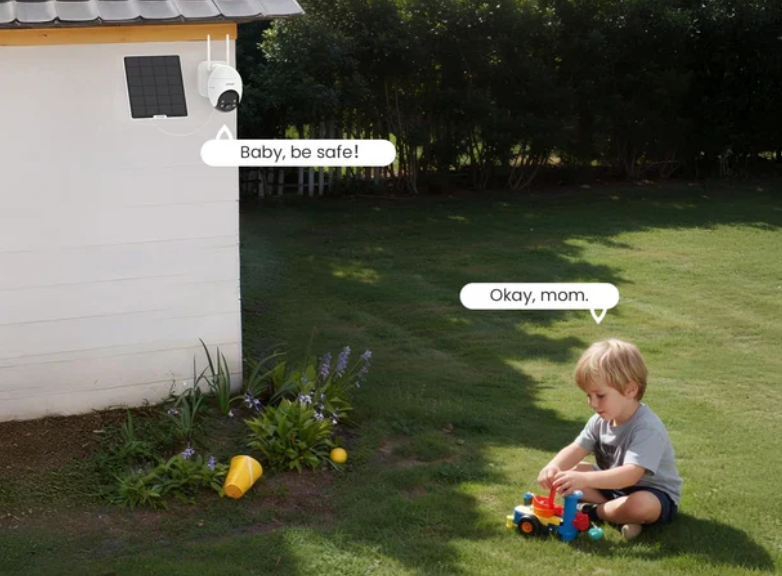
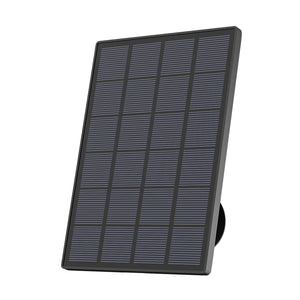
Power and storage often constrain where an infrared IR camera can go. Power-over-Ethernet (PoE) delivers power and data through one cable for fixed cameras near a building, Wi-Fi cameras suit locations with a nearby router, and battery cameras add true wire-free flexibility. For sites with neither mains power nor Wi-Fi — remote sheds, farms, allotments, building sites — a battery-powered 4G camera with a solar panel is often the only practical option, transmitting footage over a mobile network and recharging during daylight. This is where a solar cctv camera setup removes the cabling barrier entirely.
Budget and Total Cost of Ownership
The sticker price is only part of the cost: fixed PoE cameras may need professional cabling, cloud-based cameras carry monthly storage subscription fees, and battery cameras eventually need battery or panel replacement. For off-grid UK sites where running power and network cables would be prohibitively expensive, a wire-free 4G solar camera can work out cheaper than a wired system once installation is included. The ieGeek ZS-GX4S pairs a 5MP sensor with a solar panel to keep a battery topped up without mains power, while the 4G LTE ieGeek S11 suits locations well beyond any Wi-Fi signal.

Key Benefits of Using an Infrared IR Camera for Security
However, the benefits of infrared technology go beyond simply allowing cameras to record at night. A well-installed infrared camera can improve security coverage, reduce blind spots and provide more reliable evidence when incidents occur.
Reliable night-time monitoring without external lighting
-
Side entrances
-
Garden pathways
-
Garages
-
Rural driveways
-
Storage areas
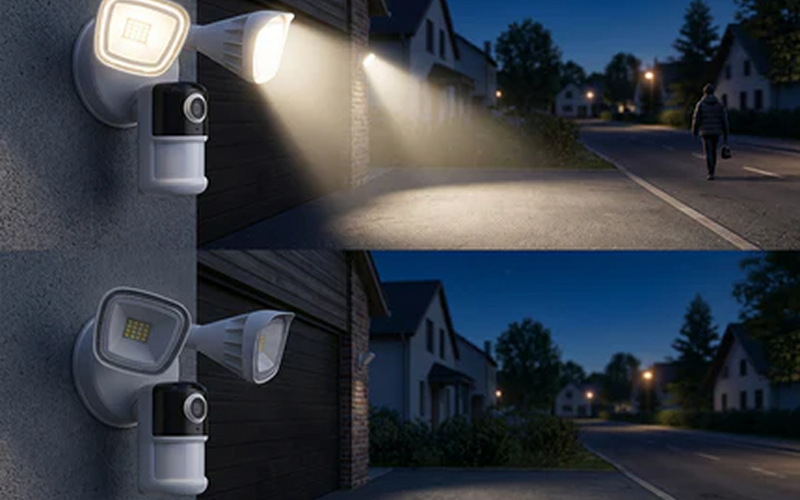
Installing additional lighting can sometimes be inconvenient or unsuitable. This is especially useful for homes with large outdoor spaces where running power cables or installing lighting systems may be difficult. A solar-powered solution such as the ieGeek S5 PTZ Solar Security Camera can provide a practical option for outdoor monitoring by combining wireless installation flexibility with continuous energy support from solar charging.

Better security evidence in low-light conditions
The purpose of a security camera is not only to record movement but to provide useful information when reviewing footage. Poor-quality night footage may show that something happened but fail to provide enough detail to understand what occurred. Infrared cameras improve evidence quality by maintaining visibility in challenging lighting conditions.
However, it is important to understand that night vision performance depends on multiple factors. A higher megapixel rating alone does not guarantee better night footage. The sensor, lens quality, infrared range and image processing technology all contribute to the final result.
Installation also plays an important role. A poorly positioned camera may have excellent specifications but still produce weak footage if infrared light reflects back from nearby surfaces.
Common Problems with Infrared Cameras and How to Fix Them
Even a good infrared IR camera can produce poor footage if a few common issues go unaddressed. Most night-vision problems — washout, pests, window reflection, and failed switching — have straightforward causes and fixes worth checking before assuming the camera is faulty.
IR Washout, Grey/White Footage, and Overexposure
When night footage looks grey, white, or blown out, the usual cause is IR light reflecting off a surface too close to the lens — a wall, soffit, or dirty dome — while condensation or dirt on the housing scatters IR across the sensor for a similar hazy effect. Clean the dome or lens, reposition the camera to clear nearby surfaces, and reduce IR intensity if the camera allows it. If the problem persists only on objects very close to the camera, consider an external IR illuminator placed away from the lens for more even lighting.
Spiders, Insects, and IR-Attracted Pests
Infrared light attracts insects, and spiders spin webs across the lens or housing to catch them — a frustrating cause of motion alerts and blurry footage. The webs catch IR light and appear as bright streaks that trigger false recordings night after night. Regular cleaning helps, and some installers apply a light smear of insect repellent around (never on) the lens housing or attach a small brush ring. Positioning the camera away from other outdoor light sources that also attract insects can reduce the problem noticeably.
IR Reflection Through Windows
Pointing an infrared IR camera through glass from indoors almost always fails: the IR LEDs fire, the glass reflects them straight back, and the footage becomes a bright white blur — a fundamental limitation of reflected-light IR, not a camera fault. To monitor outside from inside, either disable the camera's IR and rely on external lighting, or mount the camera outdoors where it belongs. For genuinely wire-free outdoor placement without drilling for power, a battery 4G camera like the ieGeek ZY-G1 transmits over the mobile network and avoids the window-reflection problem entirely.

Footage Not Switching to Night Mode
If footage stays dark at night or turns pink during the day, the IR-cut filter may be sticking or has failed — a mechanical part that can jam over time. Some cameras let you force night mode manually to confirm the IR LEDs themselves still work. If forcing night mode restores IR footage, the fault is the filter mechanism rather than the LEDs. This is often repairable on higher-end cameras but may point to replacement on budget models, so weigh the repair cost against simply fitting a new unit.
FAQs
Can infrared cameras see in complete darkness?
Yes. Infrared cameras can record in complete darkness because they use infrared illumination instead of visible light. When surrounding light becomes too low, the camera activates its infrared LEDs and switches into night vision mode. The footage usually appears in black and white because infrared light does not provide normal colour information.
Are infrared cameras better than thermal cameras for home security?
For most homes, infrared cameras are generally the better choice because they provide clearer visual details at a lower cost. Thermal cameras are better suited for specialist applications where detecting heat differences is more important than identifying appearance, such as industrial inspections or large-scale security monitoring.
Why does my infrared camera only show black and white images at night?
This is normal operation. Infrared cameras switch to monochrome mode at night because the sensor is using infrared light rather than visible light. Black-and-white footage usually provides better contrast and clearer details in darkness compared with attempting to produce inaccurate colour images.
How far can an infrared camera see at night?
The effective night vision distance depends on the camera’s infrared LEDs, sensor quality, lens type and environmental conditions. Although some cameras may advertise long IR ranges, the distance for identifying faces or small details is usually shorter than the maximum illumination range. Choosing a camera based on the actual monitoring area is more important than focusing only on the advertised distance.
Is 940nm better than 850nm for home CCTV?
It depends on your goal. 940 nm LEDs produce no visible red glow, ideal for discreet home surveillance, but have a shorter range. 850 nm LEDs reach further and suit overt deterrent use where a faint glow is acceptable.
Are infrared IR cameras legal to use in the UK?
Yes, with responsible use. If your camera captures images beyond your property boundary, data protection rules apply, including transparent signage and sensible footage retention. The ICO and UK government publish guidance to help you stay compliant.
Can an infrared camera see through glass or windows?
Not reliably. IR light reflects off glass, so a camera pointed through a window from indoors usually produces a bright, washed-out image. Mount the camera outdoors rather than behind glass.
Conclusion
An infrared IR camera is one of the most practical technologies for reliable night-time security monitoring. By using infrared illumination instead of visible lighting, these cameras can continue recording in dark environments while providing useful footage for homes, businesses and outdoor areas.
Users working in remote locations without mains electricity can explore solar and 4G infrared surveillance solutions from ieGeek to avoid costly wiring work. Anyone unsure of exact hardware specifications can review the range of outdoor monitoring cameras to compare models built for British outdoor conditions and year-round night vision operation.
Author Intro
 |
Developed by the ieGeek content team, combining hands-on experience with smart devices and insights into real user needs. ieGeek is widely known for smart security, our solutions are also designed for a variety of real-life scenarios, including travel, outdoor monitoring, pet care, and family safety. We focus on delivering simple, dependable solutions that fit seamlessly into daily life. |