


For most UK homes, visible cameras are the better starting point: they warn people that an entrance or driveway is monitored while recording activity. A discreet camera can then cover a missing angle without letting cameras dominate your home’s appearance.
The choice depends on what you need each camera to do. Deterring someone at the front door calls for a different approach from reviewing movement through a side passage. Here is how visibility affects those decisions, with practical placement advice and UK privacy considerations.

Key Takeaways
-
Use a visible camera at the front door, driveway or main gate: it records the approach while making surveillance clear enough to deter opportunistic theft.
-
Add a discreet camera only when the first camera leaves a real blind spot. Concealing a camera does not automatically produce better evidence.
-
Avoid secret indoor recording. Keep cameras visible in shared rooms and never use covert monitoring in bedrooms or bathrooms.
-
Choose mains-powered, continuous-recording cameras for busy fixed locations; use battery-powered or solar-assisted cameras where running power cables is difficult.
-
Test saved footage, Wi-Fi and night-time clarity before drilling. Live view alone may not reveal glare, obstructions or connection problems.
-
If a camera captures beyond your UK property boundary, minimise the view, display appropriate signage, secure the footage and delete it when no longer needed.
Visible vs Hidden Security Cameras: Key Differences
Visible cameras are placed in plain sight to warn people that an area is monitored. Hidden cameras for home security are concealed so that people may not realise they are being recorded.
|
Factor |
Visible security cameras |
Hidden security cameras |
|
Visibility |
Readily noticeable |
Deliberately concealed |
|
Crime deterrence |
May discourage activity by making monitoring obvious |
Offers little warning to someone unaware of it |
|
Evidence collection |
Can capture incidents, but may be avoided or covered |
May preserve an angle someone does not anticipate |
|
Best use cases |
Front doors, driveways and garages |
Limited situations where concealed recording is justified; discreet, openly used cameras generally suit ordinary home monitoring better |
Hidden cameras are not automatically illegal in the UK, but secret recording may be unlawful in places where people expect privacy, such as bedrooms or bathrooms. For ordinary home monitoring, visible or discreet home security cameras are usually the safer choice.
Pros and Cons of Visible Security Cameras
A visible camera warns people that recording is taking place. However, being easy to spot makes it easier for someone to avoid or damage it.
Advantages of Visible Security Cameras
A visible lens or floodlight signals that activity may be recorded. This may discourage opportunistic trespass or parcel theft, although it cannot guarantee prevention. Visitors can also understand that monitoring is taking place.
This deterrent works best when people notice the camera before they reach a door, vehicle or garage. On a poorly lit approach, the camera may be easy to miss and recorded details can be harder to see. The ieGeek ZY-E2 floodlight camera helps with both by lighting the approach when relevant activity is detected. The light draws attention to the monitoring and gives the camera a clearer view, while the siren can provide a stronger warning if the activity looks suspicious. Its hardwired 24/7 recording can also preserve what happened before and after the alert, making it useful for driveways and larger front gardens that need both deterrence and a fuller record.
Disadvantages of Visible Security Cameras
Someone who notices a camera may avoid its view, cover the lens or damage an accessible unit. Mount it beyond easy reach, but avoid an angle so steep that recordings show only the tops of heads.
Highly visible cameras and powerful floodlights can look intrusive or cause glare. Angle the light down towards your own entrance, away from neighbouring windows and the camera lens, then test the saved footage after dark.

Pros and Cons of Hidden Security Cameras
A hidden camera records without attracting attention. That may help if someone avoids an obvious camera, but concealment can affect performance and privacy.
Advantages of Hidden Security Cameras
A concealed camera may capture activity after an obvious camera has been covered or avoided. It can also record a route without advertising the exact viewing position.
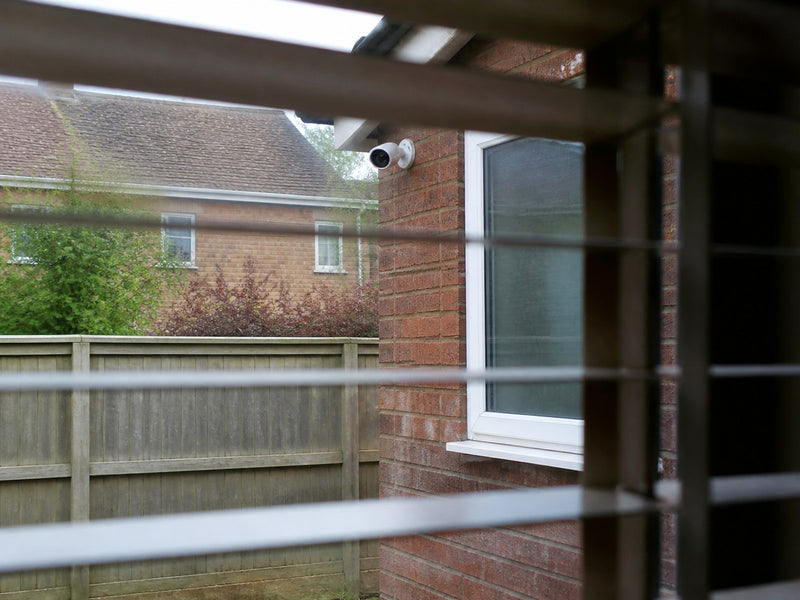
In many homes, a discreet secondary camera provides a useful alternative. For example, a compact unit overlooking the inside of a gate can fill a coverage gap without being disguised as an everyday object. Its value comes from the additional angle.
Disadvantages of Hidden Security Cameras
A camera cannot warn someone away if they do not know it exists. Concealment may also obstruct the lens, affect the performance of night vision cameras or restrict ventilation.
Secret recording can damage trust, particularly where people expect privacy. Avoid covert monitoring in bedrooms, bathrooms or guest accommodation. In shared living areas, explain what indoor security cameras record to household members, carers, cleaners and visitors instead of relying on their small size to go unnoticed.
Visible vs Hidden Security Cameras for Different Home Areas
Think about where the camera will go and what you need to see. A driveway camera has a different job from one in your lounge.
Front Doors and Driveways
Front doors and driveways usually benefit from visible outdoor security cameras because they can deter unwanted activity while recording people as they approach. Aim the lens along the route towards the entrance rather than directly down at the doorstep, leaving enough space in the frame to show visitors, deliveries and nearby vehicles.
Indoor Security Cameras
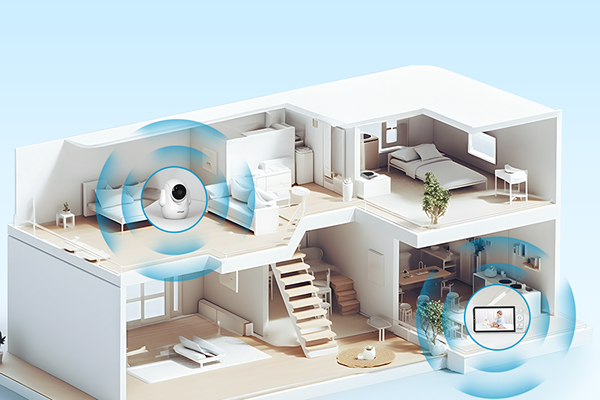
Indoors, choose a compact camera that remains visible to people using the room. Broad coverage and privacy matter more here than deterrence, so a hidden camera adds little benefit and may make occupants uncomfortable. A fixed lens may also miss movement between different parts of a living room or home office.
The ieGeek SC1 Pro indoor security camera addresses that problem by sitting openly on a shelf and panning or tracking movement across the room. One unit can cover a wider area, with 24/7 recording and local storage for playback.
Side Entrances and Back Gardens
For a side entrance or back garden, use a visible camera facing the gate when the aim is to discourage entry. Because these routes may be long or blocked by walls, fences and planting, check whether one view shows the full path. Add a discreet second camera only if the layout creates a genuine blind spot.
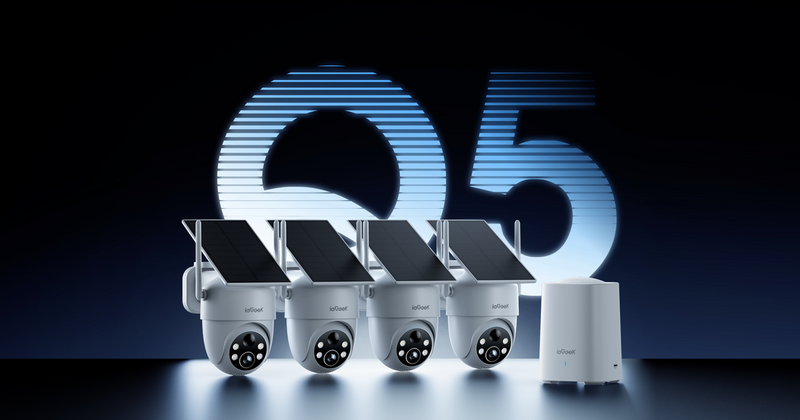
For a longer route, the ieGeek S7 wireless 24/7 recording camera can pan across different areas, while AOV recording shows how someone entered, moved through the garden and left. Solar-assisted power allows more choice of position. Test Wi-Fi there before drilling, as exterior walls can weaken the connection.

How to Combine Visible and Discreet Cameras for Better Home Security
Combine them along the same route: the visible camera provides the first warning, while the discreet camera covers where its view ends. Together they create a more complete record.
Use Visible Cameras as the First Layer of Security
Place the visible camera at the front path, driveway or gate where it can be seen before someone reaches the door or vehicle. It should discourage unwanted entry while recording people as they approach your door or vehicle.
For effective home CCTV installation, keep the camera's frame focused on the entrance instead of trying to cover every nearby passage. During a test walk, note where the person leaves the recording. That point shows where the discreet camera needs to take over.
Add Discreet Cameras to Preserve Missing Activity
Place the discreet camera just beyond that point, such as inside a gate, around a corner or further along a side passage. Keep it openly installed but much less noticeable than the first camera.
Let the edge of its view overlap slightly with the visible camera’s frame. This small overlap helps prevent gaps and makes it easier to match the two recordings. Walk the full route in daylight and darkness, then compare timestamps and recording start points. Adjust the angles if both cameras capture largely identical areas or if movement disappears between them.
UK Privacy Rules for Visible and Hidden Home Cameras
UK rules focus on what a camera captures, regardless of whether it is visible or discreet. If it records a neighbour’s property, public areas or communal spaces, data protection law applies. Follow the ICO’s home CCTV guidance:
-
Limit the view: Aim towards your property and use privacy masks where possible.
-
Display signage: Tell people about recording before they enter the monitored area.
-
Use audio carefully: Disable it unless sound recording is necessary and proportionate.
-
Protect the footage: Restrict access, answer footage requests and avoid unnecessary sharing.
-
Delete it regularly: Use automatic overwriting and save incident clips separately when required.
FAQ
How can you tell if it is a hidden camera?
Darken the room and slowly shine a phone torch across smoke alarms, clocks, chargers and vents; a small lens may reflect a bright pinpoint. Check unfamiliar devices aimed towards a bed or bathroom and cables with no clear purpose. A router’s device list may reveal an unknown connection, but it is not proof. In rented accommodation, photograph the device and report it rather than dismantling anything.
What is the maximum time a CCTV camera can record?
There is no fixed maximum. In the app, check the available storage, resolution, recording mode and overwrite setting. Record for 24 hours, note how much space was used and divide the usable capacity by that daily amount for a rough estimate. Continuous high-resolution video uses more space than event recording. The ieGeek S7’s AOV mode can capture activity between alerts, but the chosen settings still determine the actual history available.
Do hidden cameras record sound?
Some do; check the microphone and audio-recording settings. Record a 30-second clip with someone speaking nearby, then play it back with your phone’s volume turned up. Two-way talk only confirms that the microphone and speaker work; it does not prove that sound is saved with every recording. Disable audio when it is unnecessary.
Can I point my security camera at my neighbours?
Open the live view and identify exactly where your boundary ends. Tilt the camera down, narrow the angle or apply privacy masks to exclude neighbouring windows and gardens. If a small section of pavement cannot be avoided, capture only what the security purpose requires, display suitable signage and keep the footage for no longer than necessary.
Are wired or wireless cameras better?
Choose mains power for a fixed, high-activity location that needs dependable power, strong lighting or 24/7 recording, such as a driveway where the ieGeek ZY-E2 may fit. Choose battery or solar power for side passages or gardens without an easy mains connection, where the ieGeek S7 offers more placement freedom. The ieGeek S7 still needs Wi-Fi for remote viewing despite being battery-powered.
Conclusion
Start with one useful view of the main entrance, then review what it misses before buying another camera. Keep that camera visible, then use a discreet second camera to cover any remaining blind spots. Test saved footage at night and confirm recording and storage settings before relying on the setup.
About the Author
 |
Developed by the ieGeek content team, combining hands-on experience with smart devices and insights into real user needs. ieGeek is widely known for smart security, our solutions are also designed for a variety of real-life scenarios, including travel, outdoor monitoring, pet care, and family safety. We focus on delivering simple, dependable solutions that fit seamlessly into daily life. |