

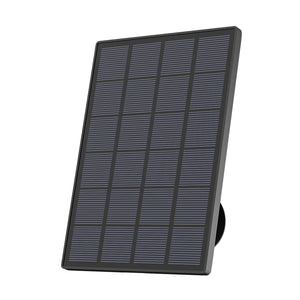


Home security in the UK is shifting quickly. Many households face the same frustrations: WiFi that drops out, batteries that drain too fast, and cameras that fail when they’re needed most. Rising energy costs and growing safety concerns make the search for smarter, low‑maintenance solutions urgent. That’s where the solar CCTV camera comes in. By turning sunlight into steady power, it avoids messy wiring and the need for constant charging.
HTF Marketing Insights show solar and wireless video doorbells are among the fastest‑growing home surveillance tools, thanks to DIY setups and energy efficiency. In this guide, you’ll see how battery and solar systems differ, how a solar CCTV camera performs, and which option delivers peace of mind.
Key Takeaways
-
Both battery cameras and solar camera systems avoid mains wiring. Solar adds daily charging, which cuts maintenance.
-
Choose a battery camera if your area gets poor sunlight or if you want the simplest installation.
-
Pick a solar security camera if the panel receives steady daylight and you want fewer manual recharges.
-
Both setups rely on a rechargeable battery at night or during dark spells.
-
In freezing weather, battery efficiency dips. Use energy-saving settings and place cameras sensibly.
-
In the UK, domestic CCTV may trigger privacy duties if it records beyond your boundary.

The Operational Mechanics of Wire-Free Power Infrastructure
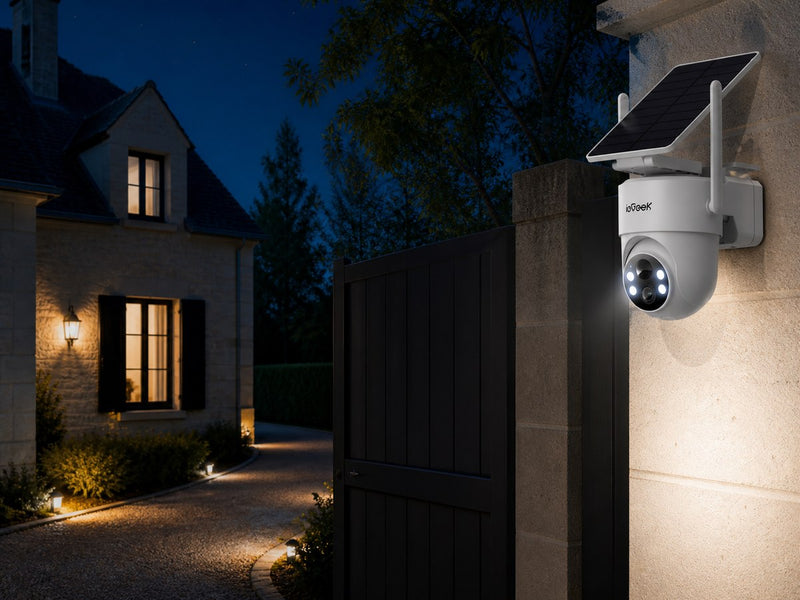
Instead, these modern devices rely on efficient internal batteries to keep your home safe. While both options store energy the same way, a solar CCTV camera adds a compact solar panel to create a self-sustaining power grid right on your wall.
Standalone Battery vs. a Solar Camera
Because it receives no external power, you must take the camera down to recharge it via USB a few times a year. If you place it over a busy driveway, the frequent alerts will drain the battery much faster, turning maintenance into a regular chore.
Perks of a Solar Powered Security Camera
-
It records in sharp 2K/3MP resolution and uses a 355° pan‑and‑tilt lens for wide coverage.
-
Features include a 5000mAh battery, bright color night vision, and smart AI human detection that ignores moving branches.
-
Its upgraded BC solar panel delivers 30% higher efficiency than standard models.
-
A 3‑metre cable lets you place the panel in direct sunlight while keeping the camera in the shade.

Understanding how these systems manage power helps you place them effectively. If your target area sits under deep, permanent shade from mature trees, a standalone battery camera is highly practical. However, if your wall gets a few hours of sunlight, adding a solar panel provides continuous protection.
Performance Under Real UK Weather Conditions
While paper specs matter, the camera's survival depends on holding a charge through cold snaps and capturing enough weak daylight between the rain clouds.
Winter Frost and Your Solar CCTV Camera
-
You need to tighten your motion zones. Stop the lens from waking up for swaying tree branches or distant passing cars.
-
Make sure you use smart detection. Rely on AI human-only alerts, so pets and foxes do not trigger the recording.

Devices like the ieGeek S5 are physically built to handle freezing drops down to -10°C. By combining this tough hardware with fewer false alerts, your battery stays fuller, sparing you the stress of low-power warnings.
Solar Video Surveillance Under Cloudy Skies
-
Place your solar CCTV camera on a clear driveway or garden wall.
-
Tilt the panel directly toward the wide, open area.
-
Forget about climbing wobbly ladders.

With a little smart placement, you can outsmart the weather and keep your home protected year-round.
Side-by-Side Comparison: Battery vs. Solar Surveillance
Choosing your defense setup comes down to your daily lifestyle, not flashy tech labels. Think about who will climb the ladder to plug in a dead device, and picture how busy your property is. Let us look at how these wire-free choices stack up to find your ideal match:
| Feature | Battery Camera | Solar Camera Setup |
| Power Source | Internal battery pack only | Battery plus solar panel top-up |
| Best Location | Shaded porches or dark alleyways | Open gardens, fences, and driveways |
| Maintenance | Requires manual USB charging | Automatic charging via daylight |
| Winter Habits | Drains faster under heavy activity | Uses daytime light to stay alive |
| Setup Effort | Mount the single camera unit | Position camera and angle the panel |
A solar security camera wins on sheer everyday convenience. If your target spot catches even a sliver of open sky, a solar-powered security camera keeps you safely on the ground while keeping an uninterrupted eye on your world.

Strategic Placement Tips for Your Solar Panels
-
You should always chase the open sky. Mount the panel where it catches the most daylight throughout the day. Avoid tucking it under deep roof eaves or behind the shadow of a tall oak tree.
-
You can easily stretch the connection cable. Devices like the ieGeek S5 come with a handy 3-metre cord. This means you can mount your camera on a dark, sheltered porch for a great view, while pinning the panel to a sunny brick wall. That flexibility is the quiet strength of a modern solar CCTV camera.
-
You must remember to keep the glass clean. Wipe away sticky autumn leaves, thick dust, and bird droppings a few times a year. Dirty glass blocks light and significantly slows your charging speed.
-
The setup easily matches your daily routine. If you travel frequently, a solar-powered security camera ensures you never lose connection in the middle of your holiday. For busy families, pointing one at the driveway lets you keep an eye on parked cars and children’s bikes without adding another charging chore to your weekend.
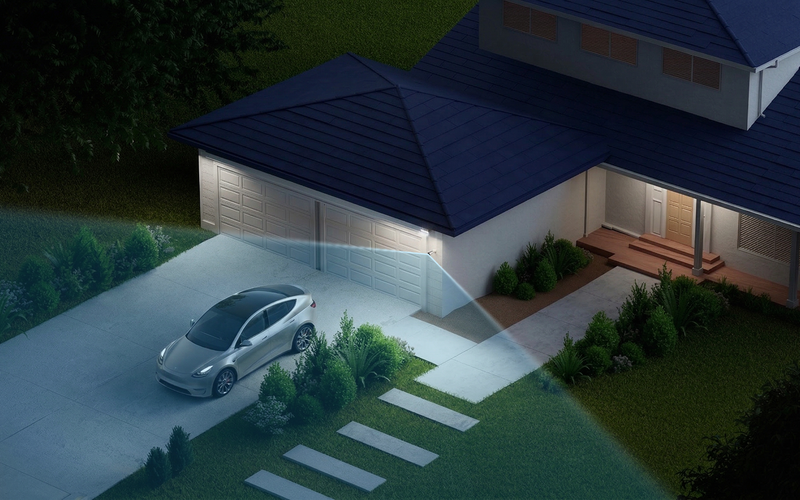
Always check what your lens actually sees before you drill any holes. To avoid trouble, angle your solar camera downward so it covers your gate, patio, or front door. This simple tilt respects local privacy rules and stops passing traffic from draining your battery.
FAQs
Will a solar security camera work during a dark UK winter?
Yes, a solar security camera survives gloomy British winters. It harvests scattered daylight through thick clouds, not just direct sunshine. As long as your panel faces the open sky and isn’t blocked by dense tree shadows, the built-in battery stores enough power to keep your home protected on frosty January mornings.
How often do I need to manually charge a solar-powered security camera?
Ideally, you should not touch it. A well-placed solar-powered security camera charges itself effortlessly. However, if you point the lens at a bustling pavement or endure a week of heavy storms, the battery drains faster. For a quiet back patio, this setup removes the stressful chore of climbing a ladder.
Can I extend the cable between my solar cctv camera and its panel?
Yes, you easily can. Many models offer generous cords for flexible mounting. For instance, you can tuck your solar CCTV camera under a dark, sheltered porch while stretching its cable to secure the panel to a bright, sun-soaked brick wall. Always check the manufacturer’s provided cable lengths before buying any extra third-party extension cords.
Do standalone battery cameras drain faster than a solar camera setup?
Absolutely. Standalone models act like a shrinking water bucket, steadily emptying every time a stray fox triggers the lens. Meanwhile, a solar camera constantly refills its power reserves from the sky. If you accidentally hide the panel under deep roof eaves, it will behave like a standalone unit and drain quickly.
What happens to my solar video surveillance system if the panel is covered in snow?
When thick snow blankets the panel, energy gathering temporarily stops. Fortunately, your solar video surveillance device switches to its stored internal battery. Once that icy layer melts or slides off the tilted glass, normal charging automatically resumes. Just grab a soft broom to gently sweep it clear after a heavy blizzard hits.
Conclusion
Instead, for watching over a busy driveway or a blooming backyard, a solar-powered outdoor security camera delivers the perfect balance of easy setup and hands-free peace of mind. Just map out where the sun hits your brickwork the hardest, pick your spot, and let nature power your security.
Author Intro
 |
Developed by the ieGeek content team, combining hands-on experience with smart devices and insights into real user needs. ieGeek is widely known for smart security, our solutions are also designed for a variety of real-life scenarios, including travel, outdoor monitoring, pet care, and family safety. We focus on delivering simple, dependable solutions that fit seamlessly into daily life. |