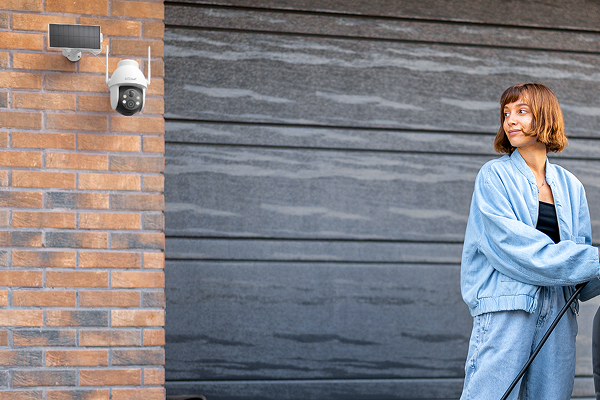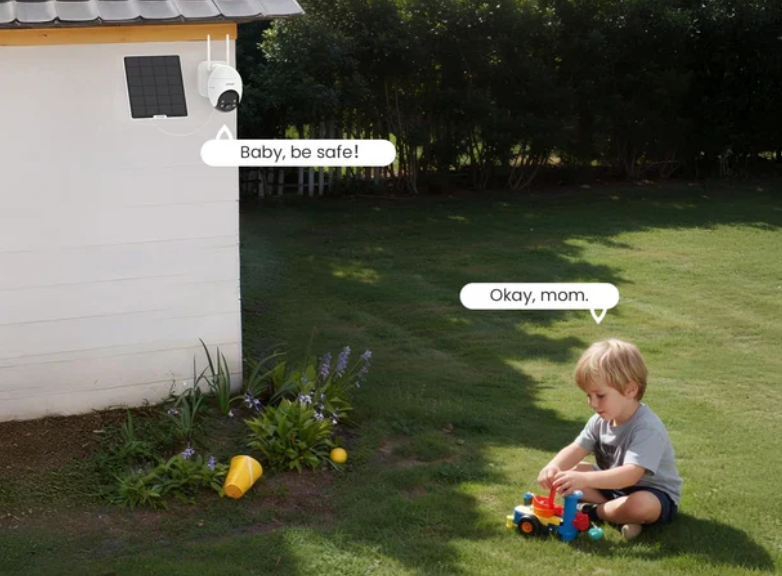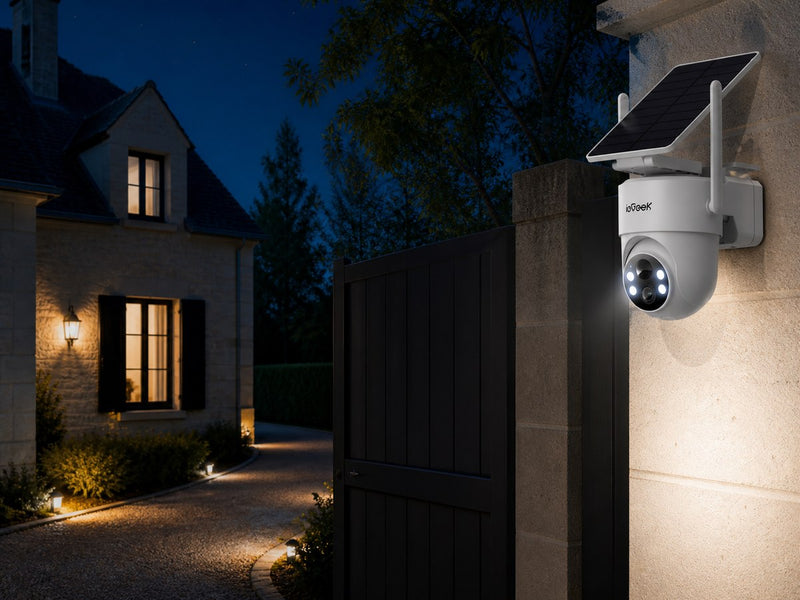


Outdoor security cameras often face reduced visibility at night. Limited lighting can make it harder to identify people, vehicles or activity around areas such as driveways, entrances and gardens, particularly during the UK’s longer autumn and winter evenings.
A floodlight with security camera combines powerful outdoor lighting with video recording to provide clearer night-time footage. This guide explains where floodlight cameras are most useful, how they compare with other outdoor cameras and what to consider before installation.

Key Takeaways
- A floodlight camera combines outdoor lighting with video monitoring, helping improve visibility and capture more useful details in dark areas after sunset.
- Wider spaces such as driveways and garage entrances usually benefit from broad floodlighting, while smaller areas such as side gates and narrow paths may need more focused lighting.
- The right camera depends on the area being monitored: the ieGeek ZY-E2 floodlight camera is suited to wider areas that need lighting and continuous monitoring, while the ieGeek ZS-GQ4 spotlight camera is better for focused visibility around smaller access points.
- Before installation, consider factors such as power supply, camera position, recording settings and storage capacity to ensure the floodlight camera works effectively in everyday use.
What a Floodlight Camera Adds After Dark
A camera view that looks clear during the day can lose useful detail after sunset. Additional lighting can improve both what you can see live and the usefulness of recorded footage later.
Wider Visibility Across Dark Outdoor Areas
Dark outdoor areas often have uneven lighting, with some parts of a driveway, garden or pathway remaining outside the range of existing lights. A floodlight camera adds wider illumination around the camera position, helping extend visibility beyond the small area covered by a single outdoor light.
By illuminating a broader area around the camera, a floodlight camera helps homeowners maintain a clearer view of larger outdoor spaces instead of only the area directly in front of the lens.
More Useful Colour and Scene Detail
Better lighting can improve more than just visibility at night. It can also help cameras capture details that are difficult to recognise in darker conditions.
When an outdoor area is only monitored with infrared night vision, footage is usually shown in black and white, which can limit some visual information. Additional lighting allows more natural colours and clearer scene details to be captured, making it easier to distinguish features such as clothing colours, vehicle colours or objects around the property.
If you’re checking footage after a missing parcel or damage to a parked car, those details can help explain what happened, rather than simply show that someone was there.
Where Floodlighting Makes the Biggest Difference
Different outdoor areas have different lighting requirements. A wide driveway, a narrow side path and a large garden may all need security monitoring, but the type of lighting that works best can vary depending on the space.
Driveways and Garage Entrances
Driveways and garage entrances usually cover a wider area, so they need lighting that can cover both vehicle movement and nearby access points. A small entrance light may brighten the doorway but leave parts of the driveway or parking area less visible after dark.
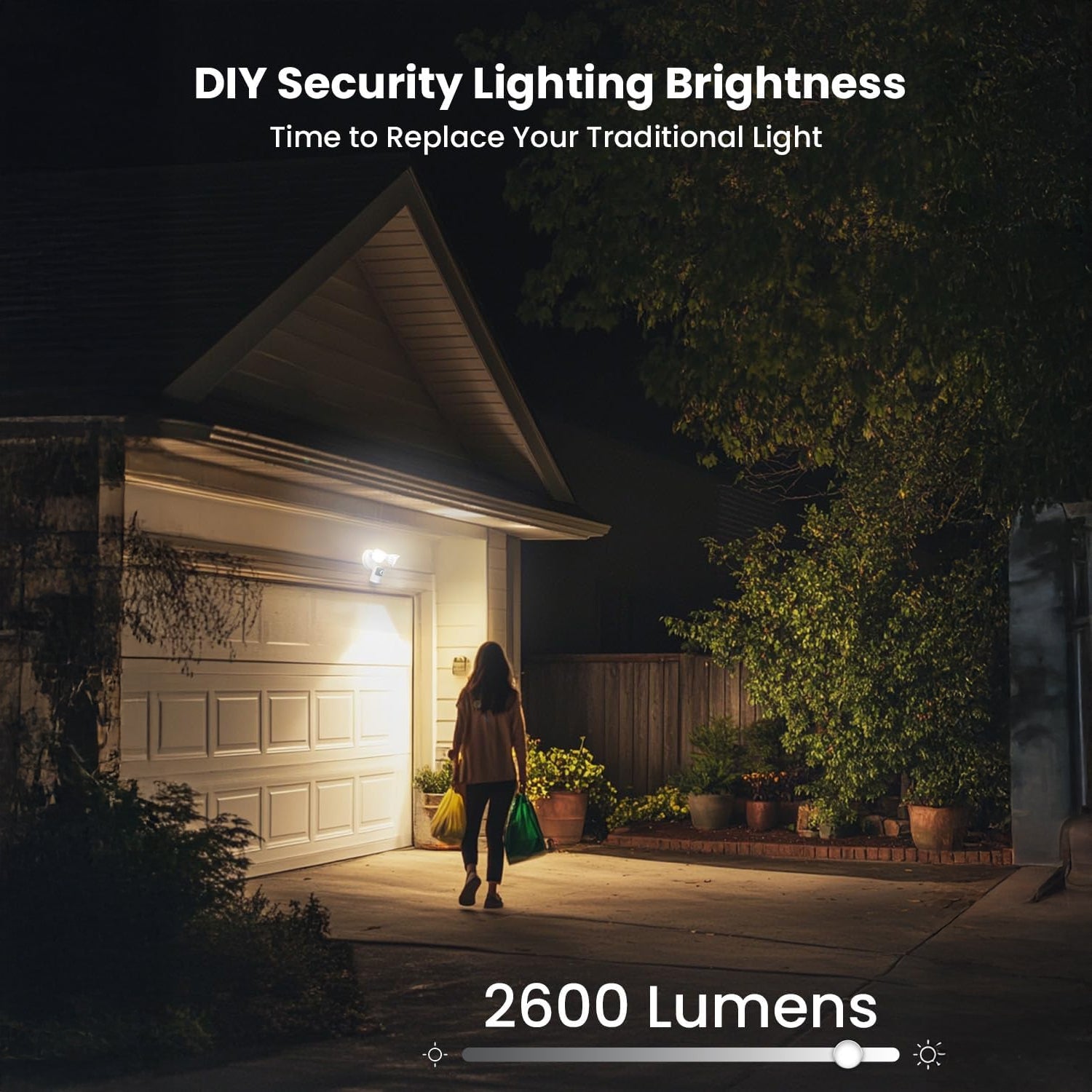
For this type of open space, the ieGeek ZY-E2 floodlight camera combines a 2600-lumen floodlight with a 5MP camera to provide both wide-area illumination and video monitoring. Hardwired power and 24/7 recording also allow the camera to keep monitoring activity continuously instead of relying only on motion-triggered clips.
With broader lighting coverage across the driveway or garage entrance, you can more easily check who is approaching or what is happening beside a parked vehicle after dark.
Side Gates and Narrow Paths
Side gates, side passages beside terraced or semi-detached homes, and narrow footpaths usually have a more concentrated monitoring area. The main need is to see clearly around a specific route, such as a gate, doorway or access path, rather than illuminate the entire outdoor space.
These locations often require focused lighting instead of broad floodlighting. The ieGeek ZS-GQ4 spotlight camera uses a built-in spotlight together with 5MP video and colour night vision to improve visibility around smaller access areas. PTZ control also helps adjust the viewing direction when checking different parts of a side entrance or narrow pathway.
By directing light where movement is most likely to happen, focused illumination can improve visibility around important access points without creating unnecessary brightness across the surrounding area.
Front Gardens and Larger Gardens
Front gardens and larger gardens often combine open spaces with multiple movement paths. A camera may need to monitor visitors approaching the home while also keeping track of activity further away from the entrance.
For these areas, the best choice depends on the existing lighting environment. A floodlight camera can add both illumination and monitoring where the garden is dark, while a camera with wider viewing coverage or colour night vision may be a better fit when outdoor lighting is already sufficient.

Floodlight vs Spotlight vs Standard Outdoor Cameras: Key Differences
A floodlight security camera is one option among several outdoor security cameras. Understanding how floodlight, spotlight and standard outdoor cameras differ can help homeowners match the camera type to their property.
| Camera Type | Lighting Coverage | Best Placement | Night-Time Visibility | Power Supply | Main Use |
|---|---|---|---|---|---|
| Floodlight Camera | Wide-area illumination | Driveways, garage entrances, larger gardens | Adds active lighting for clearer scenes | Usually mains-powered | Lighting and monitoring together |
| Spotlight Camera | Focused lighting | Side gates, paths, entrances | Highlights specific areas and details | Depends on model | Targeted monitoring |
| Standard Outdoor Camera | Existing light or built-in infrared, depending on model | Entrances, gardens and other areas within night-vision range | Can record in darkness using infrared, where fitted | Battery, solar or wired options | Video recording without broad visible floodlighting |
The right choice depends on the conditions around the installation area. Spaces with limited lighting may benefit from a floodlight camera, while areas that already have sufficient illumination may place more value on recording capability and viewing flexibility.
The ieGeek S7 wireless 24/7 recording camera is designed for locations where users want longer video history without necessarily adding another light source. It supports Always-On Video 24/7 recording and PTZ control, allowing you to adjust the viewing direction and retain a record throughout the day and night. Always-On Video and conventional continuous recording can differ in frame rate and power use, so check the recording settings before choosing.
This type of setup can be useful for outdoor areas that already have lighting available but still require a more complete record of activity over time.

What to Check Before Installing a Floodlight Camera
Choosing a floodlight camera is not only about brightness or video resolution. The installation location, power source and recording requirements all affect how well the camera performs in everyday use.
Power and Existing Outdoor Wiring
Floodlight cameras usually require a stable power source because they combine lighting with video recording. Before installation, homeowners should ask a registered electrician to check whether the existing outdoor wiring is suitable for a mains-powered model.
A garage wall, exterior entrance or existing outdoor light position may provide a more practical installation point. Choosing the right location can reduce installation challenges and help the camera operate consistently.
Light Coverage and Camera Position
The position of the camera affects both lighting coverage and video quality. A floodlight aimed in the wrong direction may illuminate an area that is not important while leaving key locations poorly covered.
Think about where people actually walk or park. A camera positioned towards your own driveway entrance may provide more useful footage than one facing an empty section of garden.
Recording and Storage
Recording settings should also be considered before installation, especially when deciding where the camera will be placed. Some locations may only need motion-triggered clips, while others may benefit from continuous recording security cameras that provide a more complete history.
Storage capacity should match the selected recording mode so important footage remains available when reviewing past activity.
Neighbours and Light Spill
Outdoor lighting should also be positioned carefully. A floodlight aimed towards neighbouring windows may create unnecessary disturbance, especially where terraced homes or neighbouring driveways sit close together.
Adjusting the angle, detection area and brightness settings where available can help keep the lighting focused on the intended area while reducing unwanted glare.
FAQ
How to choose the best floodlight camera?
The best floodlight camera depends on the area you need to monitor. The ieGeek ZY-E2 floodlight camera is suited to wider areas such as driveways and garage entrances, while focused lighting models like the ieGeek ZS-GQ4 spotlight camera may better fit smaller access areas.
Do floodlights deter burglars?
Outdoor lighting can make an area more visible and may discourage some unwanted activity because people are less likely to remain unnoticed. However, lighting works best as part of a wider security setup rather than as the only security measure.
Can you leave a floodlight camera light on all night?
Some floodlight cameras can keep the light on continuously, depending on the model and settings. Motion-activated lighting is often preferred because it provides visibility when needed while reducing unnecessary energy use.
What are the common problems with floodlight cameras?
Common issues include incorrect installation position, unsuitable power supply, weak Wi-Fi connection and light spill. Check the camera’s connection and night-time view at the intended mounting position before fixing it in place.
Do floodlights use a lot of electricity?
Energy use depends on the light’s wattage, operating time and lighting mode. A floodlight that activates only when movement is detected generally uses less electricity than the same light remaining switched on continuously.
Conclusion
A floodlight camera can provide more than additional brightness at night. By combining outdoor lighting with video monitoring, it helps homeowners see more clearly around areas such as driveways, entrances and gardens.
The best option depends on the space being protected. Larger dark areas may benefit from wide floodlighting, while narrower access points may be better suited to focused spotlight cameras. For locations that already have sufficient lighting, continuous recording can provide another way to maintain a more complete view of outdoor activity.
About the Author
 |
Created by the ieGeek editorial team, drawing on hands-on product experience and ongoing research in Smart Security solutions. As a brand focused on simple, reliable, and affordable wireless security systems, ieGeek combines practical insights with real-world use cases to help users make informed decisions. |