



Front door security has become a priority for many households across the UK. With more online shopping, flexible working arrangements and unattended parcel deliveries, the entrance to a home is often the first point of contact for visitors, couriers and, occasionally, opportunistic criminals. According to guidance from the UK Home Office and police crime prevention initiatives, visible security measures can help deter unwanted activity while providing valuable evidence if an incident occurs.
A safe doorbell has become a practical part of modern home security rather than a nice-to-have accessory. The most common mistake buyers make is focusing only on image quality or brand familiarity. In reality, the better question is whether the doorbell suits your home, your installation limits, and your long-term budget. This guide explains what makes a doorbell camera safe, how to decide between a plug in doorbell and a wireless doorbell camera , and compares different installation options.
Key Takeaways
-
A safe doorbell delivers physical security, anti-hacking protection, and GDPR compliance for UK homeowners, addressing doorstep crime and privacy risks in one solution.
-
No-subscription doorbells eliminate ongoing costs and keep footage local, making them the top pick for privacy-focused households across the UK.
-
Wireless doorbell cameras suit renters and homes without existing wiring, while plug in models offer reliable 24/7 power for permanent installations.
-
Proper setup—including secure Wi‑Fi, correct camera positioning, and privacy zones—is essential to avoid legal issues and hacking risks.
-
ieGeek’s range of wireless security cameras and doorbell cameras provides local storage, encryption, and IP67-rated durability without mandatory subscriptions.
-
Following ICO and GDPR guidelines ensures your safe doorbell protects your home without infringing on neighbours’ privacy or breaking UK data laws.

How a Safe Doorbell Protects Your Home Every Day
A safe doorbell offers reassurance in everyday situations rather than only during emergencies. By combining live video, motion detection and remote communication, it helps homeowners stay informed about activity outside their property. The greatest benefits often come from routine use, making daily life more convenient while improving overall security.
See Visitors Before Opening the Door
One of the most practical advantages of a smart doorbell is the ability to identify visitors before answering the door. Whether someone arrives unexpectedly during the evening or while you're working from home, live video allows you to check who is outside without opening the door.
This feature is especially useful for elderly residents, families with young children and people living alone. A wide-angle camera paired with clear night vision can improve visibility during darker winter afternoons, which are common across the UK. Two-way audio also allows homeowners to communicate safely with visitors without creating unnecessary contact.
Monitor Deliveries Remotely
Missed deliveries remain one of the most common frustrations for UK households. A video doorbell allows homeowners to see when parcels arrive, speak directly with delivery drivers and provide alternative instructions if they are away.
For households that receive regular online orders, combining a video doorbell with additional wireless security cameras around the driveway or side entrance can provide wider coverage of delivery areas. This approach is particularly useful for detached properties where parcels may be left outside the camera's immediate field of view.
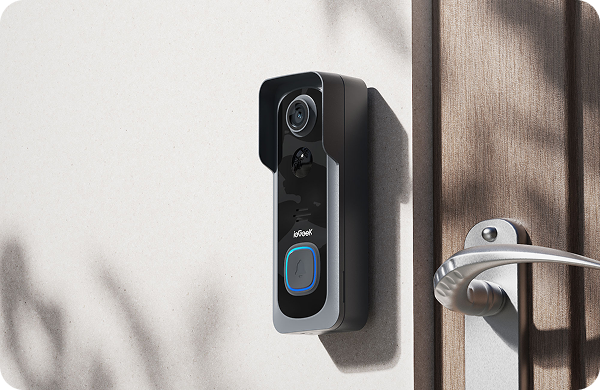
Homeowners looking for simple installation often choose ieGeek J10 battery-powered doorbell cameras that require minimal wiring while still providing remote access through a smartphone app.
Receive Instant Alerts for Unusual Activity
Modern doorbells use motion detection to notify users whenever activity occurs near the entrance. Rather than recording continuously, many systems can distinguish between people, vehicles and general movement, helping reduce unnecessary notifications.
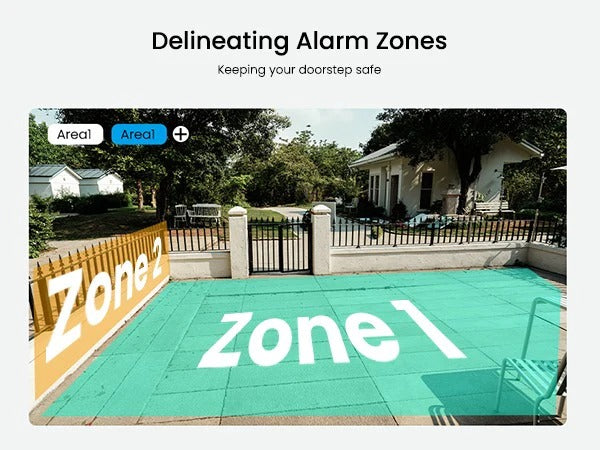
Activity zones further improve accuracy by allowing homeowners to focus monitoring on pathways, gates or the front doorstep while ignoring public roads. This reduces false alerts caused by passing traffic or pedestrians and makes notifications more meaningful.
Record Evidence if an Incident Occurs
Although most days pass without incident, recorded footage can become valuable if suspicious activity takes place. High-quality recordings may assist with identifying visitors, confirming delivery times or providing supporting evidence following theft or property damage.
Many homeowners also appreciate having a record of unexpected callers, contractors or neighbours visiting while they were away. When selecting a system, consider whether recordings are stored locally or in the cloud, as each option offers different advantages for accessibility and data security.
Wireless Doorbell Camera vs Plug-in Doorbell: Which Is Right for You?
Both wireless and plug-in doorbells improve home security, but each is designed for different installation environments. The best choice depends on your property's existing wiring, preferred maintenance level and how frequently the entrance is used.
Benefits of a Wireless Doorbell Camera
Wireless doorbell cameras are popular because they can usually be installed without significant electrical work. Battery-powered models are particularly attractive for renters, listed buildings or older properties where running new cables may be impractical.
Modern rechargeable batteries often last several months between charges, depending on usage and environmental conditions. Many newer models also support intelligent power management that reduces unnecessary recording to extend battery life.
For homeowners seeking an easy-to-install solution, the ieGeek J1 Wireless Doorbell Camera provides a practical balance between convenience and everyday security. It is suitable for households wanting flexible installation without making permanent alterations to their property.
Advantages of a Plug-in Doorbell
Plug-in doorbells receive continuous power, eliminating the need to recharge batteries. This makes them well suited to busy entrances where motion events occur frequently throughout the day.
Continuous power also supports longer recording sessions and more frequent motion detection without concerns about battery consumption. Homeowners who already have compatible wiring may find installation straightforward while benefiting from uninterrupted operation.
However, installation can be more complex in older UK properties that lack suitable doorbell wiring. Professional installation may also be required depending on the electrical setup.
Which Option Suits Different Property Types?
| Property Type | Recommended Doorbell Type | Why It Works |
| Detached house | Wireless or Plug in | Flexible depending on existing wiring and driveway size. |
| Semi-detached home | Wireless Doorbell Camera | Easy installation with reliable front-door coverage. |
| Terraced house | Wireless Doorbell Camera | Minimal drilling and suitable for shared entrance layouts. |
| Flat or apartment | Wireless Doorbell Camera | Ideal where permanent wiring changes are restricted. |
| New-build home | Plug in Doorbell | Existing wiring often supports continuous power installation. |
| Rental property | Wireless Doorbell Camera | Can usually be installed and removed without structural changes. |
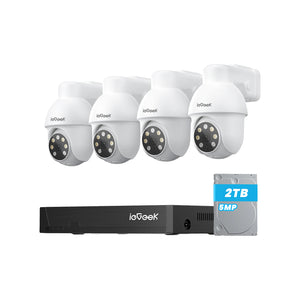
For larger properties where a doorbell alone cannot cover the entire entrance, pairing it with an outdoor camera such as the ieGeek S5 PTZ Solar Security Camera can improve visibility across driveways, garages or side access points. Solar-powered models reduce maintenance while extending coverage beyond the front door.

Key Features to Look for When Choosing a Safe Doorbell
Choosing a safe doorbell involves balancing security, usability and long-term reliability. While many products advertise high specifications, the most important features are those that improve everyday protection and provide consistent performance throughout the year. Understanding how each feature contributes to home security makes it easier to select a device that suits your property and lifestyle.
High-definition Video Quality
Clear video is the foundation of any effective doorbell camera. Higher resolutions such as 2K or 5MP provide sharper images, making it easier to identify faces, clothing details and parcels left at the doorstep. This additional clarity can be valuable when reviewing footage after an incident or confirming delivery details.
Video quality should also be considered alongside dynamic range and night vision performance. Entrances often experience challenging lighting conditions, particularly during darker winter afternoons in the UK. Features such as HDR help balance bright sunlight and shadows, while infrared or colour night vision improves visibility after dark. Choosing a camera with a suitable weather resistance level, such as an IP67 rating, also helps ensure reliable performance during heavy rain and changing weather conditions.
For homeowners seeking improved image clarity without complicated installation, solutions such as the ieGeek Bell J9 Plus 5MP Doorbell Camera provide higher-resolution recording while remaining suitable for everyday residential use.

Smart Motion Detection
Traditional motion detection often records every passing vehicle, moving branch or pedestrian, resulting in unnecessary notifications. Modern smart detection uses artificial intelligence to distinguish between people, vehicles and other movement, making alerts more accurate and reducing notification fatigue.
Many systems also allow users to customise activity zones. This enables the camera to focus on paths, gates or the doorstep while ignoring public roads or neighbouring driveways. Properly configured activity zones improve both convenience and privacy by limiting unnecessary recording outside your property.
For larger entrances or homes with multiple access points, pairing a doorbell with additional wireless security cameras can provide broader coverage and reduce blind spots that a single front-door camera cannot monitor.
Two-way Audio
Two-way audio allows homeowners to communicate with visitors through a smartphone, even when away from home. Beyond convenience, this feature offers practical security benefits by enabling users to verify visitors before opening the door or provide delivery instructions remotely.
Good audio quality depends on both the microphone and speaker performance. Noise reduction technology helps conversations remain clear in windy conditions or near busy roads, while echo cancellation improves communication when speaking through the mobile app. For families, elderly residents or people who travel frequently, two-way audio provides reassurance without requiring physical presence at home.
Local Storage vs Cloud Storage
Storage options influence both ongoing costs and how recorded footage is accessed. Local storage saves recordings directly to a memory card or compatible hub, allowing users to avoid monthly subscription fees while maintaining ownership of their footage.
Cloud storage offers the advantage of remote backups, protecting recordings if the device is damaged or stolen. However, it often requires an ongoing subscription and depends on a stable internet connection.
The most suitable option depends on individual priorities. Homeowners who prefer lower long-term costs may favour local storage, while those wanting off-site backups may consider cloud services. Many of today's doorbell cameras support both options, giving users greater flexibility.
Comparison: Local Storage vs Cloud Storage
| Feature | Local Storage | Cloud Storage |
| Monthly fee | Usually none | Often required |
| Internet dependency | Lower | Higher |
| Data ownership | Stored locally | Stored remotely |
| Access while travelling | Available through app (device dependent) | Generally available |
| Protection if camera is stolen | Limited | Better backup protection |
| Best for | Cost-conscious homeowners | Users wanting automatic remote backup |
Where Should You Install a Safe Doorbell?
Even the most advanced doorbell camera cannot perform effectively if installed in the wrong position. Correct placement improves image quality, motion detection accuracy and Wi-Fi stability while helping respect neighbours' privacy.
Recommended Mounting Height
Most manufacturers recommend installing a doorbell between approximately 1.2 and 1.5 metres from the ground. This height usually provides a natural viewing angle for visitors while allowing parcel deliveries to remain visible near the doorstep.
Mounting the device too high can reduce facial detail, while installing it too low increases the risk of accidental damage or tampering. Homeowners should also consider accessibility and existing doorframe design before final installation.
Best Viewing Angle
A camera should cover the entrance pathway rather than pointing directly across neighbouring properties or public roads. Positioning the lens slightly towards the approach path provides better facial recognition while reducing unnecessary recordings of passing pedestrians.
Wide-angle lenses generally improve coverage but should be combined with adjustable activity zones to minimise false alerts. Testing the live view before permanently fixing the mount helps ensure the desired field of vision has been achieved.
Avoid Direct Sunlight
Strong sunlight can reduce image quality by creating glare, excessive contrast or lens flare. Whenever possible, install the camera beneath a porch roof or sheltered entrance where direct sunlight is less likely to affect recordings throughout the day.
Sheltered installation also protects the device from prolonged exposure to rain and snow, extending its service life. Where exposure cannot be avoided, selecting equipment designed for outdoor environments becomes particularly important.
Improve Wi-Fi Signal Strength
A wireless doorbell depends on a reliable internet connection for live viewing, notifications and firmware updates. Weak Wi-Fi signals may cause delayed alerts, reduced video quality or intermittent connectivity.
Before installation, test the signal strength near the front entrance using a smartphone. If coverage is poor, a mesh Wi-Fi system or wireless extender may improve performance. For remote entrances without reliable broadband, homeowners may also consider a 4g security camera as an alternative solution for monitoring gates, outbuildings or rural properties.

FAQs
Are wireless doorbell cameras secure?
Yes, provided they use encrypted connections, receive regular firmware updates and support strong account security such as two-factor authentication. Choosing reputable manufacturers and keeping software updated significantly reduces security risks.
Can someone hack a smart doorbell?
Like any internet-connected device, vulnerabilities may exist if passwords are weak or software is outdated. Using unique passwords, enabling two-factor authentication and installing updates promptly helps protect your device.
Is local storage safer than cloud storage?
Neither option is universally better. Local storage provides greater control over your recordings and avoids subscription fees, while cloud storage offers off-site backups if the camera is damaged or stolen. Many homeowners prefer systems that support both.
Do I need Wi-Fi for a wireless doorbell camera?
Most wireless doorbell cameras require Wi-Fi to provide live streaming, remote notifications and app access. Some models continue recording locally during temporary internet interruptions, but remote features may be unavailable until the connection is restored.
Can renters install a wireless doorbell camera?
In many cases, yes. Battery-powered wireless doorbells usually require minimal modifications and can often be removed when moving home. Renters should always check tenancy agreements before installing permanent fixtures.
Is a plug-in doorbell more reliable than a battery-powered model?
Plug-in models provide continuous power and require less ongoing maintenance. Battery-powered models offer greater flexibility and easier installation, making them particularly suitable for older properties, listed buildings and rental homes.
What is the best doorbell camera without subscription UK users should look for?
Many UK homeowners prioritise devices that include local storage, intelligent motion detection, two-way audio and reliable mobile notifications without recurring fees. When comparing models, consider long-term ownership costs rather than focusing solely on the initial purchase price. Solutions such as the ieGeek J1 Wireless Doorbell Camera are designed to offer essential everyday security while reducing dependence on subscription services.
Conclusion
A safe doorbell is an essential upgrade for UK homeowners, protecting against doorstep crime while respecting privacy laws and avoiding unnecessary costs. No-subscription wireless and plug in models deliver reliable security without hidden fees or data risks, making them the smart choice for modern households.
By prioritising encryption, local storage, GDPR compliance, and correct setup, you can enjoy full doorstep protection without hacking dangers or neighbour disputes. Explore ieGeek’s range of doorbell cameras and wireless security cameras to find a safe, durable, and subscription-free solution tailored to your UK home.
Author Intro
 |
Developed by the ieGeek content team, combining hands-on experience with smart devices and insights into real user needs. ieGeek is widely known for smart security, our solutions are also designed for a variety of real-life scenarios, including travel, outdoor monitoring, pet care, and family safety. We focus on delivering simple, dependable solutions that fit seamlessly into daily life. |