



Have you ever worried about your home while you're on holiday? Or felt uneasy at night because you couldn't see who was at your door? You're not alone.
In 2025, the UK smart home security market generated £8.4–£9.7 billion. According to Omdia, 542,600 UK households now pay for professional security monitoring. That's a 31% jump from 2024. An outdoor wireless cctv camera system has become an essential part of home security. Protecting your home should be simple. You don't need an engineering degree. And you shouldn't spend thousands on cables, whether you're in a flat or a semi-detached house.
This article guides you through the best outdoor wireless CCTV systems today. We cut through the technical jargon. You can find a solution that fits your actual life.

What Is an Outdoor Wireless CCTV Camera System?
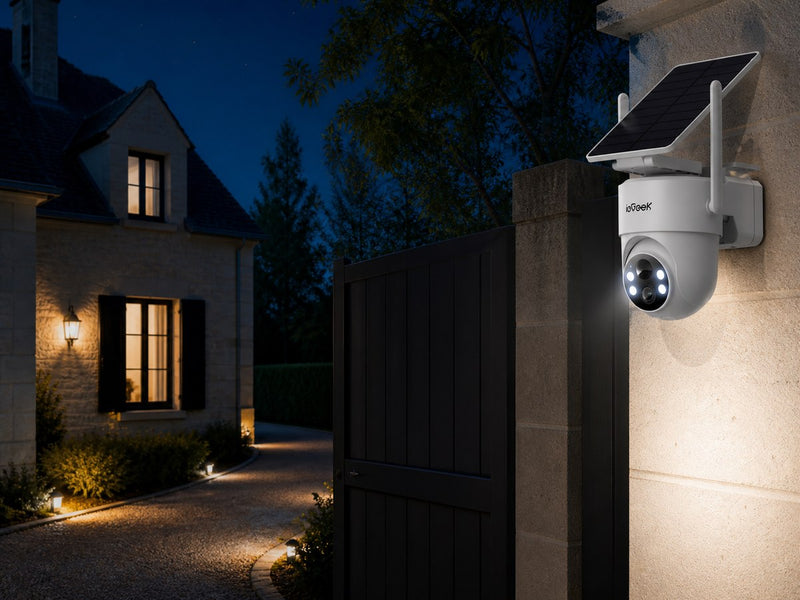
A wireless outdoor CCTV camera sends video to your phone. No video cable is needed. Wired systems need drilling and professionals, but wireless cameras use Wi‑Fi. They run on rechargeable batteries or solar panels. This makes them ideal for renters or DIY homeowners. You can avoid any permanent changes to your property. That is the basic definition of a wire-free outdoor camera.
When the camera detects motion via PIR sensors, it records and sends the clip to the cloud or an SD card. You get a phone alert and can view live footage from anywhere. You can check deliveries, watch kids, or talk to visitors. It turns your smartphone into a 24/7 security command centre. It is simple to install and always watching.
Why More Homeowners Are Switching to Wireless Outdoor CCTV Systems
Three factors drive the shift from wired to outdoor wireless cctv camera system.
First, it’s about remote access. Omdia found that 21% of UK respondents already pay for cloud storage, with 29% showing interest. You're no longer tied to a monitor in your living room. Check your front door while travelling. Monitor your backyard during work. You can also track package deliveries from anywhere.
Second, traditional wired systems are costly. Professional installation for a basic 4-camera wired setup starts at £800 plus VAT. That's according to MyBuilder. Wireless systems eliminate these overheads. You can install cameras yourself with just a screwdriver. It takes under 30 minutes and saves you hundreds of pounds.
Third, wireless systems adapt to layout changes without leaving holes. DIY wireless adoption is accelerating rapidly because homeowners value flexibility. Living in a rental? Take your cameras when you move. Need to reposition one? Adjust it in seconds. What used to require an electrician now needs nothing more than a Wi-Fi connection.
Key Benefits of Choosing a Wireless Outdoor CCTV System
Not all wireless outdoor cameras are built the same. Here are five features that matter for UK homes for the best outdoor security camera system. They separate a reliable security upgrade from a frustrating waste of money.
1. Reliable Night Vision Matters More Than Resolution
Many brands boast about "4K quality," but the real test is how the camera performs in the dark. High resolution becomes useless when night vision fails. Most burglaries happen at night, so you need a camera that can identify faces or licence plates in low light.
A high-sensitivity sensor delivers clear, full-colour images even under a quarter moon. You see a jacket colour, not a grey silhouette. So prioritise 2K resolution with strong night vision. Don't be fooled by 4K that fails in low light.
2. Weatherproofing Is Essential for UK Outdoor Use
British weather brings driving rain and freezing winters. So an outdoor camera needs an IP65 rating or higher – dust-tight and safe from water jets. Without this, moisture seeps in within months, causing lens fogging and failure. Always check the IP rating before buying a weatherproof outdoor wireless cctv camera system.

3. Subscription Fees Add Up Faster Than Most People Expect
Low upfront prices often hide monthly fees. A £50 camera with a £3 per month cloud subscription costs £108 over three years – more than the camera. That is how you find the best outdoor security cameras without subscription – free cloud storage and local backup.
4. Battery vs Solar: Which Setup Is More Practical?
“Wireless” usually means video without cables, not power. Battery-powered cameras offer maximum flexibility. You can mount them anywhere in minutes. Most last three to nine months per charge, depending on how often they trigger. A busy front door drains faster; a quiet garden lasts longer. But you will need a ladder every few months to recharge.
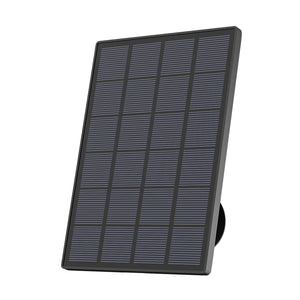
Solar-assisted cameras add a small panel that trickle-charges the battery. For hard-to-reach spots, choose a south- or west-facing position. It keeps them running with little manual charging.
Choose battery-only if you can easily reach the camera. Pick solar if your spot gets decent daylight and you want “fit and forget” convenience.
5. Motion Detection Should Reduce False Alerts — Not Create More
Few things are more frustrating than your phone buzzing every time a leaf blows past. Effective motion detection uses a PIR sensor and on‑device AI. It recognises people, pets, and vehicles.
This reduces false alerts by 80–90% compared to basic sensors. You can ignore a dog in the garden, but get an instant alert when a delivery driver approaches your porch.
Is a Wireless CCTV System Better Than Wired for Outdoor Use?
Not sure whether to go wireless or wired? The table below breaks down the key differences for outdoor use.
|
Wireless CCTV System |
Wired CCTV System |
|
|
Installation |
DIY (10-20 mins) |
Professional (£800+ VAT) |
|
Flexibility |
Move anytime |
Permanent, fixed cabling |
|
Reliability |
Dependent on Wi-Fi quality |
Very reliable, but physical cable damage disables the camera |
|
Maintenance |
Lens cleaning, battery recharge |
Lens cleaning, cable inspection for corrosion or rodent damage |
For most UK homes, wireless is the better choice. That changes only if you already have pre-wired cabling or need 24/7 continuous recording.
Best Outdoor Wireless CCTV Camera Systems for Different Needs
Finding the best outdoor security camera system depends on your living situation. Also, on the specific areas you want to monitor. Here is how our different models solve real-world problems for UK homes.
Affordable, wire‑free, and no frequent charging. That's the S5 for homeowners.
The S5 has a detachable solar panel and a 2K HD wide‑angle lens (approx. 110°). You can mount the camera in a shaded area, like under a porch roof, while placing the solar panel in direct sunlight. Installation takes minutes on 2.4GHz Wi‑Fi.
Furthermore, the camera captures colour night vision. Its AI motion detection recognises human shapes. This cuts false alerts from passing cars or cats.
If you're living alone with late-night deliveries, your phone will notify you instantly. You can view the 2K footage and use two-way audio to speak to the courier. The whole system runs on continuous, free solar energy.
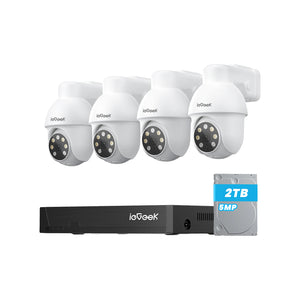
This camera is for users who need to monitor a wide area. That includes driveways, side gates, or large back gardens. You also want remote camera movement and active deterrence.
The ZS-GX4S offers 5MP ultra‑HD and colour night vision up to 15m (50ft). You can use the ieGeek app to rotate the camera 355° horizontally and 120° vertically. This means you don't need to buy multiple static cameras. The built‑in solar panel powers three rechargeable batteries. You never have to charge them manually.
With this camera, parents can easily pan the camera to keep an eye on children playing across a wide lawn. At night, if an uninvited guest approaches, the floodlight and siren will scare them away.
This system is best for detached structures or rural areas. These places are completely out of your home's Wi‑Fi range.
The ZY-G4 operates entirely on 4G LTE networks, so you don't need broadband to stay connected. It includes 7 days of free mobile data upon purchase. Thanks to the 9000mAh battery and solar panel, the camera records 24/7. An AOV (Always-On-Video) lens provides 360° coverage and detects movement up to 30m (100ft).
You can monitor a detached garage, a remote allotment, or a stable. This camera keeps the area protected. It survives rain and dust with an IPX5 rating. You can install it in seconds with no tools. Then check your property instantly from anywhere.

Where Should You Install Outdoor Wireless Security Cameras?
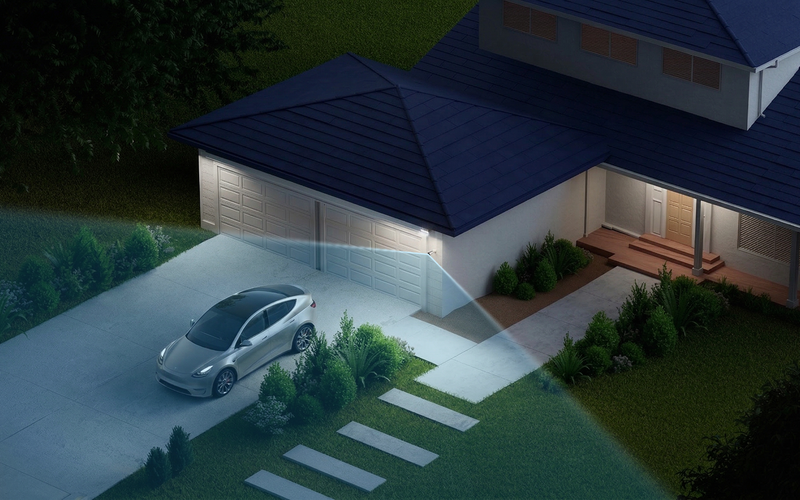
Proper placement matters. It can help you catch a thief, not just the top of their hat. Prioritise these four locations for the outdoor wireless cctv camera system.
-
Front door: Aim at the entrance and package delivery zone. Mounting height: 2–2.5m (7–8ft). Angle slightly downward to capture faces.
-
Back or patio door: Common entry point for burglars. Cover the door and adjacent windows.
-
Side gate or alleyway: Narrow passages provide intruder concealment. Use a wide‑angle camera (110° or greater).
-
Driveway or garage: Vehicles and tools are high‑theft targets. Ensure the camera covers the full length of your vehicle.
Avoid bright light sources – they cause lens flare. And avoid neighbours' windows, which may violate UK privacy rules.
Common Mistakes People Make When Buying Outdoor Wireless CCTV Systems
Skipping these five details could leave your home unprotected. Here's what to watch out for before you buy.
Choosing cameras with cloud-only storage
Wi‑Fi interruption or a lapsed subscription can result in lost footage. Always select cameras with a microSD slot.
Ignoring the WiFi signal strength
Before installing, check the signal at the intended mounting location. If your Wi‑Fi signal is weak (less than about -70dBm), the camera will lag or drop frames. Stable 1080p streaming requires at least -70dBm. You might need a Wi-Fi extender for cameras 40 feet (12.19 meters) away from the router.
Buying indoor-rated cameras for outdoor use
Indoor cameras lack weather sealing. In the UK, rain can render them inoperable within weeks. Always look for an IP65+ rating on any outdoor camera.
Installing cameras too high
While 15 feet (4.57 meters) might seem safe from thieves, all you'll record is the tops of people's heads. Keep cameras at "face-identification" height—around 8 feet (2.44 meters).
Focusing only on resolution
A 4K camera with poor dynamic range produces overexposed faces in sunlight. That's worse than a 1080p camera with great sensors. A 2K camera with wide dynamic range and good night vision often delivers better results. Look for "low‑light" performance and "HDR" capabilities instead.
FAQs
What is the best wireless security camera for outdoor use?
There is no single best option, as it depends on your needs. Look for 2K resolution, IP65 weatherproofing, and reliable motion detection. Solar models suit general home use, while 4G cameras are better for areas without Wi-Fi. For example, solar models suit low-maintenance use, 4G cameras work in no-Wi-Fi areas, and pan-tilt cameras are better for wide coverage.
Is my neighbour allowed to have a camera pointed at my house?
UK GDPR require homeowners to respect neighbours' privacy. If a camera records your garden, windows, or front door, that likely breaks the law. Your neighbour should adjust the view or use privacy masking.
Where do wireless security cameras get power?
Power comes from built‑in batteries, USB‑C, or solar panels. Most outdoor wireless cameras operate on batteries with optional solar assistance. No mains wiring is required. Most outdoor wireless cameras operate on batteries with optional solar assistance. No mains wiring is required.
How do you power an outdoor wireless security camera?
You have two options. First, bring the camera indoors for USB charging every few months. Second, attach a solar panel for outdoor trickle charging.
What will block a security camera?
Physical obstructions like branches, dirt, or spider webs can block the view. Thick brick walls, metal doors, or a weak Wi‑Fi signal can also disrupt performance. Position the cameras away from these obstacles.
How long do batteries last in wireless security cameras?
Typically three to six months, depending on trigger frequency. A busy front door (50+ triggers/day) drains faster than a quiet back garden. Adding a solar panel eliminates manual charging.
Conclusion
Choosing the right outdoor wireless CCTV system comes down to your home layout, connectivity, and how much maintenance you want to handle. ieGeek offers a range of wireless outdoor security cameras designed for different real-world needs, from compact solar models to full-coverage pan-tilt systems and 4G solutions. Each option is built to simplify home security while reducing installation effort and ongoing costs, helping you protect your property more efficiently.
Author Intro
|
|
Written by the ieGeek team, a brand dedicated to making smart security simple and accessible for everyone. With experience in designing easy-to-install security cameras, we aim to provide practical advice based on real user scenarios. Our goal is to provide reliable, easy-to-use technology that helps users stay connected and protected in different environments. |