



Night vision is one of the most useful features on a security camera. It allows the camera to continue recording after dark, even when there is very little visible light. Depending on the model, a camera may use infrared light, a light-sensitive sensor, built-in white lights, or a combination of these technologies - to capture usable footage when it’s dark.
In this guide, we'll explain how night vision works, different camera types, what affects image quality and range, and how camera placement and lighting help improve night-time footage.

Key Takeaways
- Infrared night vision can record in near-total darkness. The trade-off is that footage is usually black and white, as the camera uses infrared light instead of visible light.
- Colour night vision uses available light or built-in spotlights to capture important details such as clothing colours, vehicle colours and other identifying features after dark.
- Don't confuse night vision range with identification range. A camera might spot movement at the end of your driveway, but clearly recognising a face from that distance is another matter.
- Good night-time footage comes down to a mix of sensor quality, lens performance and infrared illumination. If one area falls short, the others can't always make up for it.
- Camera placement matters more than many people realise. Mount it too high, point it at the wrong angle, or place it near reflective surfaces, and image quality can suffer.
- The best night-time security footage comes from choosing a camera with the right range, providing suitable lighting and testing the camera view after dark rather than relying solely on product specifications.
How Does Night Vision Work
For security camera night vision, how does it work after dark? A camera needs light to create an image. The camera's lens gathers available light and directs it onto the image sensor. The sensor then converts that light into an electronic signal, which the camera processes into a viewable image. During this process, the camera can adjust brightness, contrast, and detail to make the scene easier to see.
Exactly how this happens depends on the type of night vision used. Some cameras use infrared light that the human eye can’t see, while others make better use of low levels of visible light or add visible illumination such as a spotlight. This is why night footage may appear in black and white on one camera but remain in colour on another.
Types of Night Vision
Not all night vision technologies work in the same way. Most security cameras fall into one of the following categories.
- Infrared night vision: Uses IR LEDs to produce black-and-white footage, even in near-total darkness.
- Low-light colour imaging: Makes the most of available ambient light, helping the camera retain more colour and detail without relying on bright built-in lights.
- Colour night vision: Uses visible white light or a built-in spotlight to preserve colours and finer details, making it easier to identify clothing or vehicles at night.
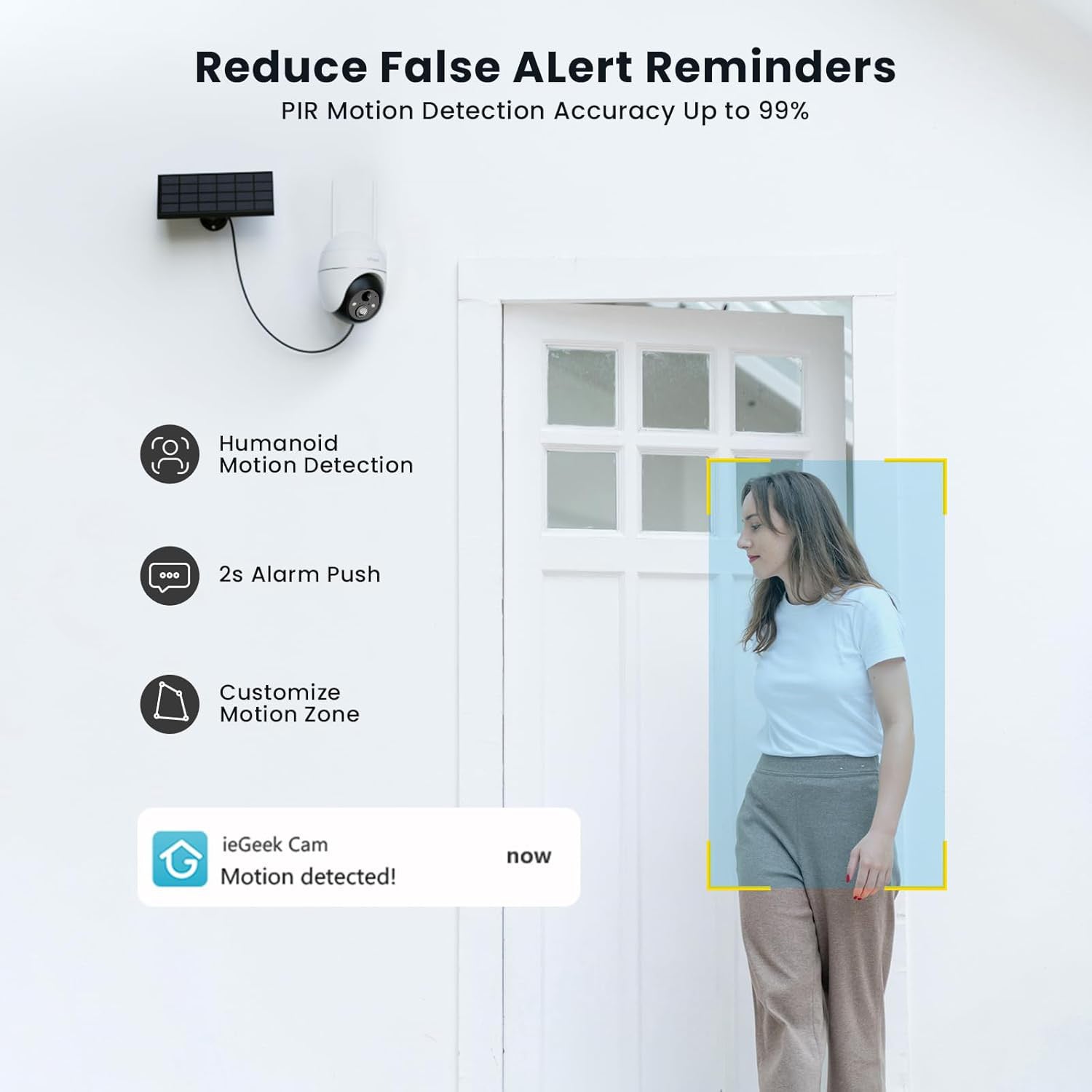
Some security cameras offer more than one night vision mode. The ieGeek ZS-GX4S colour night vision camera supports both infrared and colour night vision. It offers an infrared viewing range of up to 10 metres and an optimal colour night vision range of around 8 metres. Combined with 5MP image quality and an adjustable PTZ function, it's well suited to monitoring front doors, small gardens and short driveways while maintaining useful detail after dark.
Common Night Vision Uses
Whatever night vision mode a camera uses, the goal is the same: keeping key areas visible when daylight fades.
Security cameras at the front of your home can capture a late-night parcel delivery or record someone approaching your property, even if the porch light is switched off. Cameras overlooking driveways can help monitor activity around parked vehicles, while side passages, gardens and sheds remain visible long after outdoor lights have been turned off.
Night Vision Benefits and Limitations
Each night vision method offers a different benefit.
Infrared night vision is the go-to choice for very dark conditions, as it uses IR illumination to see what's going on. Low-light colour imaging makes the most of existing light, helping to keep colours visible without flooding the area with bright lighting. Colour night vision goes one step further by using visible light, making it much easier to make out details including clothing, vehicles and other key features.
That said, night vision still has some limitations:
- Infrared footage is typically recorded in black and white.
- Low-light colour imaging becomes less effective as light levels decrease.
- Colour night vision may require visible lighting to maintain clear and accurate colour detail.
- Nearby walls, windows and other reflective surfaces can bounce infrared light back towards the camera, reducing image quality.
- People and objects become harder to identify as they move further away from the camera.
What Affects Night Vision Clarity and Range
Not all outdoor security cameras with night vision perform the same after dark. Key factors include the sensor, lens, light available, installation position, and the distance between the camera and the area you're monitoring.
Sensor, Lens and IR Illumination
Three of the biggest factors affecting night vision performance are the image sensor, lens aperture, and IR illumination.
A more sensitive sensor can capture more light, so it can produce clearer footage in low-light conditions. The lens is also important. A wider aperture lets more light reach the sensor, which can improve image quality after dark. A narrower aperture makes low-light footage even darker.
For infrared night vision, better IR illumination can help a security camera see further and capture more detail across a wider area. Weaker IR lighting may leave distant parts of the scene looking dark or lacking detail.
Available Light
Available light is important for low-light and colour night vision cameras. More ambient lighting can help the camera keep more colour and detail after dark. When very little light is available, colours may start to fade, and the image can become less clear.
The direction of light matters as well. Even lighting increases visibility across the scene, while strong glare or bright backlighting can make faces and other details harder to see.
Distance and Installation Position
The further away a person or object is, the harder it is to capture fine detail. A camera may spot movement at a distance, but recognising a face is often easier when the subject is closer to the lens.
The height and angle at which you install the camera can make a big difference too. Mounting it too high may reduce facial detail, while positioning it too close to a wall or roof edge can leave part of the night image overly bright.
A front door or porch normally only requires clear night vision over a few metres. A long driveway or large garden needs visibility much further from the camera. The ieGeek S7 wireless 24/7 recording camera offers a stated night vision range of around 25 to 30 metres, making it suitable for larger outdoor spaces. Its 360° motion tracking can also follow movement across a wider area, helping keep more of the scene in view.

Practical Tips for More Useful Night Footage
A few simple adjustments made can make a big difference to the quality of your night-time footage.
Test the Camera After Dark
Once it's dark, look at the live view and focus on the areas that matter most: the front path, driveway, gate or garage. It can also be worth walking through the camera's field of view. If faces become blurry or movement unclear, adjust the camera angle, position or nearby lighting.
Keep Key Areas Within Useful Range
Instead of trying to capture everything at once, focus on the areas that matter most, such as entrances, gates, parked vehicles or main access routes. Remember, spotting movement is one thing. Clearly seeing who's there is another.
Reduce IR Reflections
Walls, roof edges, drainpipes and even window glass can bounce infrared light back towards the camera. The fix is often simple, though. Slightly repositioning the camera or adjusting its angle can usually solve the problem.
Add Light Where Colour Matters
Infrared night vision is excellent for detecting movement in the dark, but it can't tell you the colour of the suspicious car.
This could be easily solved by a camera with a built-in spotlight. The ieGeek ZY-E2 floodlight camera combines a security camera with a powerful 2,600-lumen floodlight, helping to keep driveways, garages and parking areas well lit. The added light makes it easier to identify vehicles, clothing colours and other important details at night. Its hardwired design and 24/7 recording also make it a good option for areas that need continuous monitoring.
At the end of the day, clearer night-time footage usually comes down to three things: good positioning, the right amount of light and making sure the areas you care about are within the camera's effective night vision range.

FAQs
How to know if CCTV is night vision?
Check the product specifications.
Look for terms such as night vision, infrared LEDs, IR night vision, colour night vision, low-light imaging or automatic day/night mode. If any of these features are listed, the camera is designed to record footage in low-light or dark conditions.
Can night vision cameras see through walls?
No. Despite what Hollywood might have you believe, night vision cameras can't see through walls. They can only record what's within their field of view.
How much does a night vision camera cost?
In the UK, a night vision security camera typically costs between £25 and £180.
Basic home cameras tend to sit at the lower end of the range. Cameras with higher resolutions, colour night vision, solar charging, smart tracking or other advanced features will cost more.
Which is better, infrared or night vision?
It depends on what you need.
Infrared night vision is ideal for dark environments and can continue recording even when there's almost no visible light. The trade-off is that footage is usually black and white. Colour night vision can capture extra detail, like clothing colours or vehicle colours, but it typically needs some visible light to work effectively.
What type of light do night vision cameras detect?
Night vision cameras can detect visible light and near-infrared light, depending on the sensor and night vision technology.
Near-infrared light is outside the range normally visible to the human eye but can still be captured by compatible camera sensors.
Conclusion
Night vision is one of the most important features of any outdoor security camera, but its performance can vary depending on the technology being used and the conditions around it.
Infrared night vision, low-light colour imaging and colour night vision all work differently, and factors such as sensor performance, available light, viewing distance and camera positioning can all affect image quality after dark.
Checking your camera after sunset, refining its position, and making sure key areas have enough lighting can help you capture footage that's genuinely useful when it matters most.
About the Author
 |
Developed by the ieGeek content team, combining hands-on experience with smart devices and insights into real user needs. ieGeek is widely known for smart security, our solutions are also designed for a variety of real-life scenarios, including travel, outdoor monitoring, pet care, and family safety. We focus on delivering simple, dependable solutions that fit seamlessly into daily life. |