


Bonfire Night safety involves more than handling fireworks correctly. Families also need to consider home security while they are out, the risk of fire or vehicle damage from stray fireworks, and the safety of children and pets throughout the evening.
This guide explains Bonfire Night safety by covering what to prepare before the celebration, how to protect your home and family during the event, and what to check afterwards. These practical steps can help households reduce risks throughout the firework season.

Key Takeaways
-
A home display should only be considered when local rules allow it and the garden can meet the safety distance stated on the firework packaging. Otherwise, choose an organised display.
-
At public events, remain behind safety barriers, keep younger children within reach and agree on a meeting point in case anyone becomes separated.
-
Buy fireworks from a registered or licensed seller, store them in their original packaging and never return to one that fails to go off.
-
Before leaving home, lock entrances, keep valuables out of sight and test alerts for the front door, garden and driveway.
-
Keep pets indoors with windows and curtains closed, and speak to a vet in advance if they have severe firework anxiety.
-
After a home display, check for smouldering debris or damage, soak used fireworks overnight and never attempt to relight an unexploded firework.
What Should You Prepare Before Bonfire Night?
Confirm the display location, journey home and who is responsible for children, pets and any fireworks kept at the property.
Check Firework Rules and Display Locations
Find an organised event through your council or a recognised organiser. In England and Wales, the official rules on buying and using fireworks state that you must be 18 or over to buy adult fireworks, while Category F4 fireworks are reserved for professionals. Members of the public must not set off fireworks in streets, parks or other public places, although properly authorised public displays are permitted. Fireworks must normally stop by 11pm, with an extension to midnight on 5 November.
Scotland generally restricts the public’s use of adult fireworks to 6pm–11pm, extending to midnight on 5 November, and councils can create Firework Control Zones. Northern Ireland normally requires a licence to buy, possess and use fireworks other than indoor fireworks and sparklers. Always check national and council guidance.
Store Fireworks Safely and Clear Fire Hazards
Buy fireworks from a registered or licensed seller and follow the instructions and safety distance on each product. If you’re attending an organised public display, leave personal fireworks at home.
Households holding a garden display should keep fireworks dry, in their original packaging and inside a closed box away from heat, children and pets. Clear leaves, fuel, aerosols, bins and furniture from the firing area. Keep sheds and other outbuildings secure as part of wider shed security. Keep water nearby, appoint one sober adult to handle the fireworks, and never carry them in a pocket or return to one that fails to go off. These precautions improve safety for Bonfire Night before a home display begins.
Security Tips for Attending Public Bonfire Night Events
Organised displays let you enjoy the fireworks without handling them yourself, but crowds, darkness and road closures create different risks.
Keep a Safe Distance from Bonfires and Fireworks
Stay behind the safety barriers and follow instructions from stewards. These barriers separate spectators from the bonfire and the area where fireworks are launched; never cross them or move closer to take photographs. Stand upwind where possible to avoid heavy smoke, and keep loose clothing away from flames. Anyone with asthma or another lung condition should carry prescribed medication and consider staying indoors if smoke is a known trigger.
Keep Children Close in Crowded Display Areas
Crowded viewing areas make it easy for children to become separated from their families. Younger children should remain within reach, while older children can carry the responsible adult’s phone number. Taking a photograph of what each child is wearing and agreeing on a visible meeting point can make them easier to find. If a child goes missing, contact an event steward immediately.
Plan Your Journey Home After the Display
Road closures, limited parking and changes to public transport may affect the journey home. Check the last bus or train in advance, charge your phone and save the route offline. A small torch can help on dark paths, while an alternative pick-up point is useful if family members become separated or the mobile signal is unreliable. Cars should be left only in authorised parking areas without blocking emergency access. A doorbell camera can also help you check for visitors while you're away at a public display.

Home Security Tips for Safety on Bonfire Night
Home security priorities change depending on whether the household is away at a public display or hosting fireworks in the garden.
Check Home Security Before Leaving
Families attending a public display may leave their home unattended for several hours. Before going out, work through a home security checklist and make sure external doors, accessible windows, the garage and the shed are securely locked. Keep car keys and valuables away from windows and out of sight from outside. Setting indoor lights on timers can also make the property appear occupied. Cameras and alarms need a quick test too, as low batteries or muted notifications may prevent alerts from reaching you.
Manage Visitors at Your Front Door
It’s easy to miss a caller when you’re out or busy in the garden. A family at a public display may be unable to answer the door in person, while those holding a garden party may not hear the doorbell over music, conversation and fireworks. Someone staying indoors alone may also want to identify an unfamiliar caller without opening the door.
The ieGeek Bell J9 Plus Video Doorbell lets you check who’s at the door and respond through your phone. Its 5MP camera and 166° wide-angle view show both the visitor and the surrounding doorway. PIR motion sensing and human detection can alert you when someone approaches, while two-way audio and pre-recorded messages make it possible to speak to callers from a public event, the back garden or another room.
Test the live view, notifications and audio at the intended installation position before mounting the doorbell. It uses 2.4GHz Wi-Fi, so check that your home network provides a reliable connection at the front door.
Monitor Your Garden and Driveway at Night
When the household is away, cars, bicycles and outdoor equipment may remain unattended. A doorbell camera usually covers the entrance but may not show a side gate, the end of the driveway or someone standing near a parked vehicle.
Outdoor areas can also be overlooked during a garden celebration. With everyone watching the fireworks, activity near the driveway or side entrance may go unnoticed. The sound of the display can make footsteps, gates or vehicle alarms harder to hear.
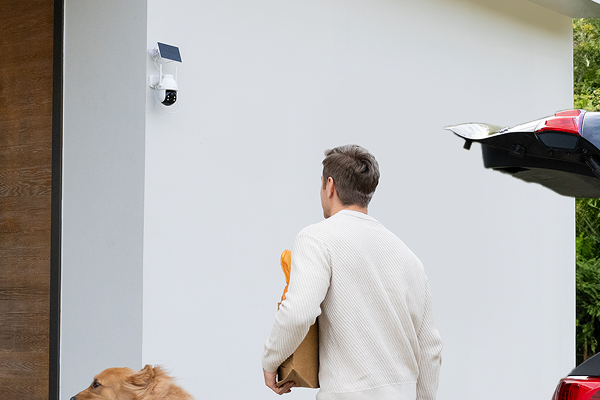
The ieGeek ZS-GX4S 5MP Solar Security Camera is designed for these wider areas. Its 5MP video captures useful detail, while 355° horizontal pan and 120° vertical movement let you look towards the side gate or parked car through the app. PIR sensing and AI detection can identify human activity and send phone alerts. Colour night vision makes people and vehicles easier to distinguish after dark, while the spotlight and siren can help deter an intruder.
Check the live feed at the planned mounting point before drilling. The camera requires 2.4GHz Wi-Fi, and a weak signal at the far end of a driveway may delay alerts.

Prevent Property Damage from Fireworks
A private garden display may be allowed where local rules permit, but the garden must be large enough for the safety distance stated on the firework packaging. Choose a flat position away from the house, garage, greenhouse, fences and parked vehicles. Spectators should remain at the distance and in the position specified by the manufacturer, rather than gathering around the fireworks.
Wind can carry sparks and burning debris towards roofs, cars or neighbouring homes. If this begins to happen, stop the display instead of moving spectators closer or ignoring the required distance. A common mistake is trying to fit fireworks into a garden that is too small; in that situation, an organised public display is the safer option.
Keep Pets Safe During Firework Displays
Plan where pets will stay while the family attends a public event or spends the evening in the garden. In both cases, loud bangs and flashes can cause hiding, pacing or escape attempts. Close windows, curtains and cat flaps before dark, and prepare a quiet room with familiar bedding. Television or music may help soften sudden noise, while severe anxiety should be discussed with a vet in advance.
The ieGeek SC1 Pro Indoor Security Camera can help you check on your pet while you’re at a display or out in the garden. Its 5MP video shows more room detail, and 360° rotation makes it easier to follow a pet moving between different areas. The 24/7 recording function also allows owners to review their pet’s behaviour later. A highly distressed animal may still need a trusted person to remain nearby.

What to Check After a Bonfire Night Celebration at Home
A quick check after a home display can help spot smouldering debris, property damage and pets that are still distressed, while footage from indoor security cameras can help owners review their pets' behaviour during the celebrations.
-
Wait for the firing area to cool, then inspect the lawn, flower beds, gutters, shed, roof edge and property boundary from ground level.
-
Wear gloves when collecting debris. Soak used fireworks in water overnight before bagging them and following local disposal guidance.
-
Leave any unexploded firework untouched and never try to relight it. Ask the supplier or local council how to dispose of it safely.
-
Look for damage to vehicles, windows and outdoor equipment. Save relevant footage from security cameras and take photographs before cleaning up.
-
Air the house after the smoke has cleared outside.
-
Watch pets for continuing distress or changes in appetite, and contact a vet if these persist. Seek urgent veterinary help for breathing difficulties.
FAQ
What should you do if your neighbour is setting off fireworks unsafely?
Do not confront them if it creates risk. Call 999 for immediate danger to people or property; report non-emergency misuse online to local police or via 101. Note times and locations safely, and contact the council about recurring noise or local-rule concerns.
Can you set off fireworks in a public park or on the street?
No. Members of the public must not set off or throw fireworks, including sparklers, in streets, parks or other public places. A properly authorised organised display is different; follow its barriers and instructions.
Can you set off your own fireworks in the UK?
Yes, subject to age limits, permitted times, local rules and the landowner’s permission on suitable private land. Northern Ireland generally requires a licence; Scotland has tighter hours and may impose Firework Control Zones. Check national and council guidance before buying.
Do fireworks hurt if they hit you?
Fireworks can cause serious burns, blast injuries, eye damage and hearing loss. Call 999 for a severe injury. Cool a burn under cool running water for 20 minutes, remove nearby clothing or jewellery unless stuck, then lay cling film over it once cooled, without wrapping it around the affected area. Do not use ice, butter or creams; seek urgent medical advice if unsure what to do.
Is the smell of fireworks harmful?
The smell accompanies smoke and pollutants that can irritate the eyes, throat and lungs. People with asthma, COPD or heart conditions may be more sensitive. Move upwind or indoors, close windows while smoke is heavy and follow your treatment plan. Seek urgent help for severe breathing difficulty.
What food is associated with Bonfire Night?
Traditional choices include parkin, toffee apples, bonfire toffee, jacket potatoes, soup, chilli and sausages. Serve food away from the firing area and keep packaging clear of flames.
Conclusion
A home display is only a sensible option when the garden is large enough for the required safety distances and local rules are met. Otherwise, an organised event is the safer choice. Families going out should secure the property and prepare for visitors and pets, while those celebrating at home need to protect nearby buildings and check the area afterwards. These practical steps make safety for Bonfire Night easier to manage throughout the evening.
About the Author
 |
Developed by the ieGeek content team, combining hands-on experience with smart devices and insights into real user needs. ieGeek is widely known for smart security, our solutions are also designed for a variety of real-life scenarios, including travel, outdoor monitoring, pet care, and family safety. We focus on delivering simple, dependable solutions that fit seamlessly into daily life. |