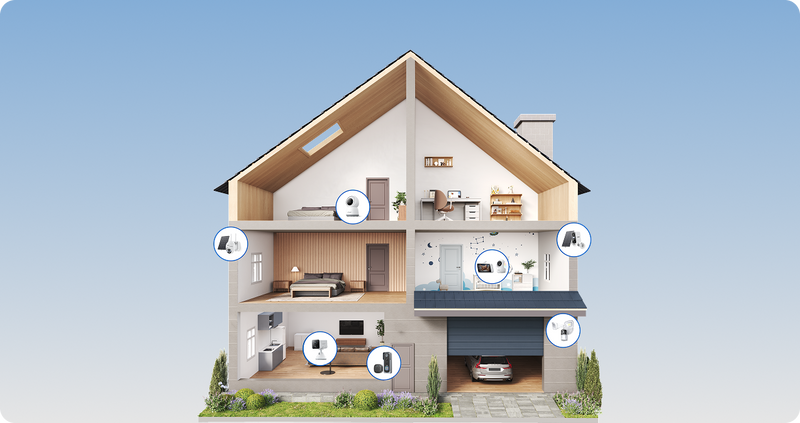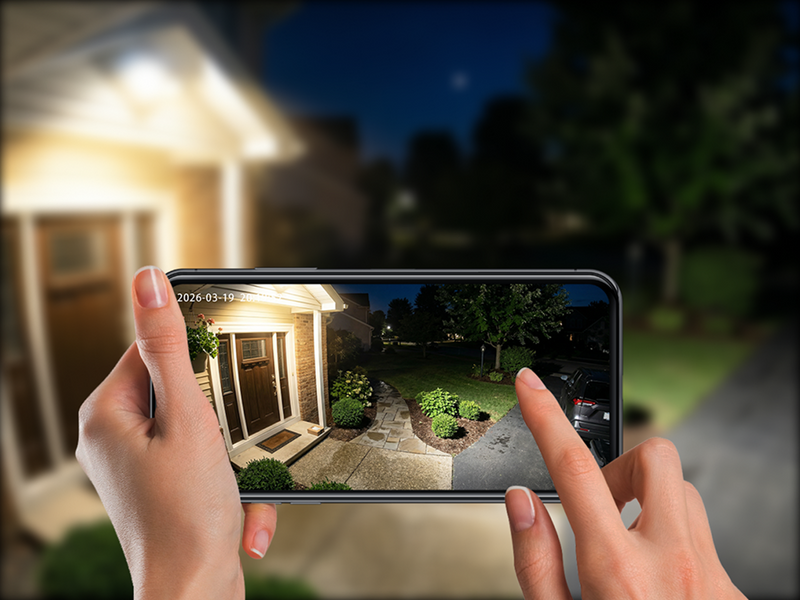




Securing your property has never been more crucial. As we navigate through 2026, the technology designed to protect our houses has evolved from grainy, unreliable recording devices into highly intelligent, proactive guardians. Whether you live in a bustling urban terrace or a quiet countryside cottage, investing in reliable exterior house cameras is one of the most effective ways to deter intruders and grant yourself absolute peace of mind.
However, the sheer volume of options on the market can be overwhelming. From deciphering technical jargon to deciding where to drill holes, setting up home surveillance systems requires a bit of strategic planning. This comprehensive guide will take you through everything you need to know to select, install, and optimise the best exterior house cameras for your property this year.

What Most Homeowners Actually Want From Exterior House Cameras?
Homeowners typically don’t want “the most advanced” security system—they want reliable protection, simple setup, and actionable alerts without constant noise or maintenance headaches. Across consumer research, the key expectations consistently center on clarity of footage, ease of installation, and meaningful detection rather than feature overload. According to security industry guidance, factors like resolution, field of view, and connectivity directly determine whether a camera is actually useful in real incidents, not just technically advanced.
Clear Coverage Without Blind Spots
A security camera is utterly useless if the footage is too pixelated to identify a suspect. When discussing resolution requirements for facial recognition, a standard 1080p (Full HD) camera is generally considered the absolute minimum. However, in 2026, 2K (4MP) and 4K (8MP) resolutions have become the gold standard. To reliably capture a clear, identifiable face—even when zooming in on the footage—you need a high pixel density. A 4K camera provides four times the detail of a 1080p camera, ensuring that crucial details, like a vehicle registration plate or facial features, remain sharp when handed over to the police.
Easy Installation Without Hiring an Electrician
Another dominant expectation is simple, non-invasive installation, especially for renters, first-time homeowners, or users without technical expertise. Industry adoption trends show strong growth in wireless and battery-powered security systems because they eliminate the need for rewiring or professional installation. The U.S. Department of Energy’s distributed energy and smart home adoption studies also note a broader consumer preference for plug-and-play home camera technologies that reduce installation friction and upfront cost barriers
Fewer False Alerts and More Useful Notifications
One of the most consistent frustrations in home surveillance is alert fatigue caused by false triggers. Research from security analytics studies shows that nearly half of users report excessive false alarms, often triggered by pets, shadows, wind, or passing vehicles. When alerts become too frequent or irrelevant, users are more likely to ignore notifications entirely, reducing the system’s effectiveness. As a result, homeowners increasingly prioritize cameras with AI-based motion detection, object recognition (people vs. animals vs. vehicles), and customizable alert zones. The goal is not maximum alert volume, but high signal accuracy—fewer notifications, but more meaningful ones that require action.
Reliable Monitoring While Away From Home
Exterior cameras are fundamentally expected to act as a remote presence system, allowing homeowners to check live conditions, receive real-time alerts, and review footage from anywhere. A large majority of users interact with their security systems daily, primarily through mobile apps for live viewing and notifications. This reflects a shift from passive recording to active monitoring, where homeowners expect instant access during travel, work hours, or nighttime absence. Reliability in this context depends on stable cloud connectivity, secure data transmission, and consistent uptime. Ultimately, homeowners want assurance that their property is continuously observable—not just recorded—regardless of their physical location.
Start by Choosing the Right Camera View Type
When comparing different exterior house cameras, most UK homeowners focus on resolution or night vision first. In reality, the camera’s viewing style often has a bigger impact on day-to-day security. A camera that suits the layout of your property will cover more useful areas, reduce blind spots, and make footage easier to review when something actually happens. Choosing the right camera type early helps avoid overcomplicating your setup or paying for features you may never use.
Fixed View Cameras — Best for Front Doors and Narrow Areas
Fixed-view exterior house cameras are ideal for places where activity naturally passes through a single point, such as front doors, side gates, alleyways, or narrow driveways. Once positioned correctly, the camera continuously records the same area without needing adjustments, making it one of the most reliable options for everyday home security.
For many UK terraced and semi-detached homes, a fixed camera above the porch or garage is often enough to monitor deliveries, visitors, and overnight activity. Because the lens stays locked on one view, footage is also easier to review compared with moving cameras. A well-placed fixed outdoor camera with motion detection and colour night vision can provide consistent coverage without adding unnecessary complexity to the system.
360° Pan & Tilt Cameras — Best for Larger Outdoor Spaces
Homes with larger gardens, corner plots, or long driveways usually benefit more from a 360° pan and tilt camera. These exterior house cameras can rotate horizontally and vertically, allowing wider visibility across outdoor spaces that would otherwise require multiple fixed cameras.
They’re particularly useful for detached homes where activity may happen across different parts of the property throughout the day. Instead of monitoring only one angle, homeowners can check different areas remotely using a mobile app or automatic patrol mode. In UK weather conditions, this flexibility can also help during darker winter evenings when visibility across larger outdoor areas becomes more important. While pan-and-tilt systems offer broader coverage, they work best when combined with accurate motion tracking and stable wireless connectivity.
Compact Pan Cameras — Best Balance Between Coverage and Simplicity
Compact pan cameras sit somewhere between fixed models and full 360° systems, making them a practical choice for homeowners who want broader visibility without dealing with a more advanced setup. These cameras usually offer moderate left-and-right movement while keeping a smaller, less intrusive design.
For typical UK family homes, compact pan exterior house cameras are often enough to monitor both the front path and driveway from a single installation point. They’re especially useful for homeowners who want flexible viewing angles but still prefer a cleaner, simpler system that’s easy to manage through a smartphone app. Compared with larger PTZ models, compact pan cameras also tend to blend more naturally into modern home exteriors while still improving overall outdoor coverage.
Choose Based on Installation & Lifestyle Needs
One of the decisions you will face is evaluating wired vs battery-powered surveillance. Each approach has distinct advantages depending on your camera installation requirements, DIY skills and property layout.
The Case for Wireless Outdoor Cameras
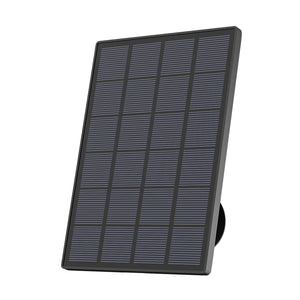
Wireless outdoor cameras operate on battery power (often supplemented by small solar panels) and transmit video via Wi-Fi. The primary benefit is effortless installation. You can mount them anywhere without drilling through thick cavity walls to route cables. However, they require occasional battery charging, and their performance heavily relies on your home network.
If you opt for this route, you must carefully check the wireless signal strength for outdoor devices. Thick brick walls and double glazing can severely degrade Wi-Fi signals. To prevent offline cameras, consider investing in a Wi-Fi mesh network or an outdoor wireless extender to ensure a robust, uninterrupted connection.
The Case for Hardwired Systems
Wired systems require a permanent power source and, in many cases, a physical cable for data transmission. While installation is more laborious, they offer 24/7 continuous recording without battery anxiety.
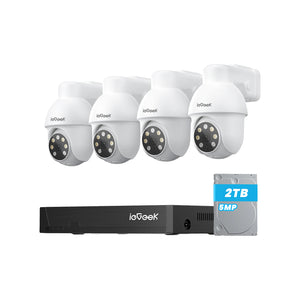
For the most robust and professional setup, Power over Ethernet (PoE) is highly recommended. A PoE system setup uses a single Ethernet cable to deliver both power and high-speed data. If you are handy with DIY, following a hardwired PoE camera installation guide can save you hundreds of pounds in professional installation fees. Briefly, the process involves:
-
Planning your cable routes from the central Network Video Recorder (NVR) to the camera locations.
-
Drilling appropriately sized holes through your exterior walls.
-
Running outdoor-rated Cat6 Ethernet cables along the eaves or through the loft.
-
Terminating the cables, mounting the cameras, and sealing the holes with waterproof silicone.
Do You Really Need 24/7 Recording?
Not every exterior house camera needs to record continuously. For most UK homeowners, the better option depends on where the camera is installed and what you actually want to monitor. Motion-triggered recording is usually enough for quieter residential streets, front doors, or small gardens, as it saves battery life, reduces storage use, and makes footage easier to review later. Continuous recording, however, can be useful for larger driveways, isolated properties, or homes facing busy public areas where movement may happen outside standard detection zones.
The UK government’s domestic CCTV guidance also recommends thinking carefully about whether your system genuinely needs to record all the time, particularly when cameras may capture public spaces or neighbouring property. Proper storage management, privacy settings, and clear recording purposes are all considered important parts of responsible CCTV use.
Motion-Triggered Recording vs Always-On Video
|
Features |
Motion-Triggered Recording |
Always-On Video |
|
How it works |
Records only when movement is detected |
Records continuously 24/7 |
|
Best for |
Standard UK homes, front doors, side paths |
Large driveways, detached homes, high-risk areas |
|
Storage usage |
Lower storage requirements |
Much higher storage demand |
|
Risk of missing events |
Small chance if motion sensitivity is poorly adjusted |
Very low risk of missing activity |
|
Recommend Product |
|
|


Many modern exterior house cameras now use a hybrid approach instead. They rely on AI motion detection for alerts like ieGeek S7 camera while keeping short pre-recording buffers to capture activity just before motion starts. This gives homeowners the benefit of smarter notifications without filling storage with hours of unnecessary footage. Some wired outdoor CCTV systems also combine continuous local recording with motion-tagged events, making it easier to search footage later. In practice, most homeowners do not need full 24/7 recording across every camera — they simply need reliable coverage in the areas that matter most.
Common Mistakes People Make When Buying Exterior House Cameras
Many homeowners focus heavily on headline features such as 4K resolution or long specification lists, but the real-world performance of exterior house cameras often depends more on placement, reliability, and how well the system fits the property itself. A camera that looks impressive online may still struggle with weak Wi-Fi coverage, poor night visibility, or unnecessary alerts once installed outdoors in typical UK weather conditions.
Choosing the right outdoor wireless CCTV system is usually less about buying the “most advanced” model and more about avoiding common setup mistakes that reduce security coverage over time. Here are some of the issues homeowners most frequently overlook.
Choosing Resolution Over Actual Coverage
Many buyers assume higher resolution automatically means better security, but even a sharp 4K image becomes less useful if important areas sit outside the camera’s viewing angle. A well-positioned exterior house camera with wider coverage often provides more practical protection than a high-resolution camera pointed too narrowly. Front paths, side entrances, and driveway blind spots are commonly missed during DIY installations.
Ignoring Wi-Fi Strength Around the Property
Wireless exterior house cameras rely heavily on stable connectivity, yet many homeowners only test signal strength indoors. In UK homes with thick brick walls, detached garages, or long gardens, outdoor Wi-Fi performance can drop significantly. This often causes delayed notifications, buffering during live view, or missing recordings. Checking signal coverage before installation helps avoid frustration later.
Buying Features You’re Unlikely to Use
Some outdoor CCTV systems include advanced tracking modes, complex patrol settings, or continuous recording options that sound appealing but rarely get used day to day. For many households, simpler features such as reliable motion alerts, colour night vision, and easy mobile access matter far more. Choosing a system that matches your actual routine usually leads to better long-term satisfaction than paying extra for unnecessary functions.
FAQs
How do security low energy exterior house cameras work?
Low energy exterior house cameras stay in standby mode until motion is detected, helping reduce battery usage. Most wireless models use PIR motion sensors and smart recording to capture activity only when needed. Some ieGeek outdoor cameras also support solar charging for longer operation with less maintenance.
Can you legally put cameras outside your house?
Yes, installing exterior house cameras on your own property is legal in the UK. However, if cameras record public areas or neighbouring property, you should follow UK privacy and CCTV guidance. Careful positioning usually helps avoid most privacy concerns.
Which type of CCTV camera is best for outdoor?
The best outdoor CCTV camera depends on your property layout. Fixed-view cameras suit front doors and narrow spaces, while pan-and-tilt models work better for larger gardens or driveways. For many UK homes, wireless exterior house cameras offer the best mix of flexibility and easy installation.
Is it an invasion of privacy if a neighbour is pointing a camera at your house?
Not necessarily, but it may become a concern if the camera records private areas such as windows or gardens unnecessarily. In many cases, adjusting the camera angle or motion zones can solve the issue without further action.
Can a laser pointer break an exterior camera?
A strong laser directed at a camera lens for a long time can potentially damage the image sensor. However, normal household laser pointers are more likely to cause temporary glare rather than permanent damage to modern exterior house cameras.
Conclusion
Upgrading to the best exterior house cameras in 2026 is an investment in your property's safety and your own peace of mind. By taking the time to understand the nuances of wired versus battery setups, the importance of high resolution for facial recognition, and the strategies for optimal placement, you can create a formidable ring of security around your home.
Remember, an effective security setup is not just about recording crimes. It is about preventing them. By combining active deterrence features, robust weatherproofing, and intelligent smart home integration, your home surveillance system will stand vigilant, rain or shine, day and night. Take the time to assess your property's unique vulnerabilities, respect privacy guidelines, and choose ieGeek system that will protect your family for years to come and offer a balanced combination of wireless convenience, outdoor durability, and everyday usability for modern home security.
Author Intro
|
|
Developed by the ieGeek content team, combining hands-on experience with smart devices and insights into real user needs. ieGeek is widely known for smart security, our solutions are also designed for a variety of real-life scenarios, including travel, outdoor monitoring, pet care, and family safety. We focus on delivering simple, dependable solutions that fit seamlessly into daily life. |