



A home security camera can show that a vehicle entered your property, but that information may not be enough. If a car pulls into your driveway, repeatedly stops outside your house, or appears during suspicious activity, a clear view of its number plate can provide useful evidence.
A number plate recognition camera can support this type of monitoring. Most households don’t need the advanced auto number plate recognition systems used by police, councils, or private car parks. However, a well-positioned home security camera can still record readable number plates when the image quality, lighting, angle, and distance are suitable.
This guide explains how number plate capture works, which camera features affect image clarity, and where to install your camera for a better view of approaching vehicles. You’ll also learn whether you need a dedicated number plate recognition system or whether a suitable ieGeek security camera can meet your home monitoring needs.
Key Takeaways
-
Most homes don’t need a professional ANPR system. A clear security camera may provide enough detail for manual plate review.
-
Resolution matters, but lighting, distance, viewing angle, vehicle speed, and placement also affect number plate visibility.
-
Position the camera where vehicles slow down, such as a driveway entrance, gate, garage approach, or parking space.
-
At night, reduce headlight glare and overexposure. Controlled lighting can make reflective plates easier to read.
-
Keep the camera focused mainly on your property and use privacy zones if it captures neighbouring or public areas.

Why Number Plate Recognition Matters for Home Security?
A blurred car shape isn’t always useful. If something happens outside your home, a visible number plate gives you a clearer lead than knowing that a dark vehicle drove past.
Plate visibility can help in several everyday situations. You may want to identify an unknown car that often stops near your driveway. Clear footage may also help after parcel theft, attempted garage access, or damage to a parked vehicle. Small shops, workshops, and private parking areas can use these details when recording an incident.
Still, capturing a plate isn’t the same as reading it automatically. Professional auto number plate recognition systems use software to detect, read, store, and search number plates. Most home setups have a simpler aim: footage clear enough to pause, enlarge, and read.
Camera quality alone can’t guarantee this result. A high-resolution camera aimed too high may miss the plate. A camera facing headlights may record a bright white blur. A basic camera placed at the right angle may capture more useful footage than an advanced model in the wrong position.
Think of it this way:
-
Camera quality provides detail.
-
Lighting keeps the plate visible.
-
Placement creates the right angle.
-
Storage gives you time to review the footage.
When these four elements work together, a number plate recognition camera becomes much more useful for vehicle-related home security.
How Auto Number Plate Recognition Works?
Auto number plate recognition, or ANPR, uses a camera and software to identify vehicle registration plates. The camera captures the vehicle, while the software finds the plate and converts its letters and numbers into searchable text.
The process usually has four stages:
-
The camera detects an approaching vehicle.
-
The software locates the number plate in the image.
-
It reads the letters and numbers.
-
The system stores the plate with the time and date.
Police, councils, and car parks often use a full number plate recognition system to check many vehicles and search past records. A home camera may not read plates automatically, but it can still capture a clear image for you to review.
The result depends on the original footage. Poor lighting, steep angles, fast movement, rain, or headlight glare can hide important details. ANPR software can analyse a clear plate, but it can’t restore information that the camera failed to record.
Do You Need a Number Plate Recognition System at Home?
Here is the main question: do UK homeowners need the same auto number plate recognition systems used by councils, police, car parks, or commercial gates? In most cases, no.
These systems are built for automatic plate reading, database records, access control, and large numbers of vehicles. They can also cost thousands of pounds. A normal home driveway rarely needs that level of technology.
What you need instead is a security camera that can record number plates clearly. Suitable home security cameras wireless can monitor vehicles near your property while keeping installation simple.
For most homes, the following features are enough:
-
A clear view of the driveway or entrance
-
Enough image detail for closer review
-
Night vision that limits glare from reflective plates
-
Motion alerts for vehicles and people
-
Local or cloud storage for saved clips
-
Privacy zones for areas outside your property
The wording can be confusing. A true number plate recognition system reads and records plates automatically. A home number plate recognition camera may only capture a plate clearly enough for you to pause the footage and read it yourself.
That difference keeps your expectations realistic. You aren’t creating a council-style traffic system. You’re improving driveway monitoring and collecting clearer evidence when a vehicle-related incident occurs.
For most houses and small properties, this option is simpler, more affordable, and easier to manage.

What to Look for in a Number Plate Recognition Camera?
Now, let’s look at the buying checklist. The right camera should make number plates easier to see in real conditions, not simply appear impressive on a specification sheet.
You need a balanced setup. Resolution matters, but lens angle, zoom, frame rate, lighting, storage, and the vehicle’s position in the image also affect the result. Mounting height, viewing distance, and controlled lighting are especially important for clear night-time plate capture.
Camera Quality and Resolution
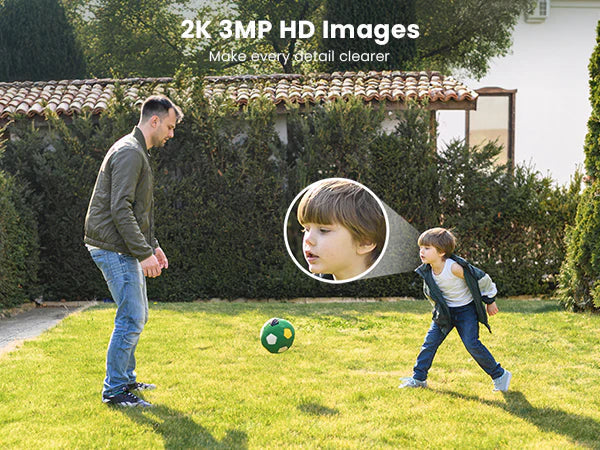
First, look for clear video. A higher resolution gives you more pixels to examine when you zoom into a recording. For driveway monitoring, 2K can provide useful detail, while 4K may show more if the plate isn’t too far from the camera.
However, resolution isn’t the whole answer. A very wide viewing angle can make the number plate appear too small. If the vehicle only fills a small part of the frame, zooming may not reveal enough extra detail.
Look for these practical features:
-
2K or 4K recording for sharper images
-
Optical or digital zoom for closer vehicle views
-
A steady frame rate to reduce motion blur
-
A suitable viewing angle for your driveway
When choosing a number plate recognition camera, make sure the vehicle fills enough of the image. A sharp camera aimed at the wrong area will still produce poor evidence.
Lighting and Night-Time Plate Capture
Next, think about night-time conditions. Number plates reflect light, and headlights can overpower the camera sensor. This is why some recordings show a bright white rectangle instead of readable letters and numbers.
Good lighting can improve the image, but too much direct light may make it worse. Infrared light, streetlights, headlights, wet driveways, and reflections from windows can all affect the plate.
For better results, look for:
-
Colour night vision for more natural vehicle detail
-
Adjustable lighting that doesn’t overexpose the plate
-
Infrared controls if the plate appears too bright
-
Spotlight or floodlight cameras for dark entrances
-
Playback controls that let you pause and zoom
In some cases, one camera can provide a wide overview while another covers a tighter vehicle area. For most homes, however, one well-positioned camera can offer a practical balance.
The aim isn’t cinematic footage. It’s readable evidence when a vehicle enters or stops near your property.
Vehicle Detection, Zoom and Storage
Vehicle detection makes it easier to separate car alerts from people, animals, or moving branches. It can also reduce the time you spend searching through unrelated clips.
Zoom lets you examine the number plate after recording. However, digital zoom can’t restore details that the camera didn’t capture. The vehicle still needs to appear large and clear in the original frame.
Storage also matters. Local or cloud storage allows you to return to the event, pause the footage, and download the useful section. Check how long recordings remain available and whether the camera saves the full event.
For everyday use, look for:
-
Vehicle or motion detection
-
Clear live view and playback
-
Simple zoom controls
-
Local or cloud storage
-
Easy clip downloads
These features won’t turn a home camera into a commercial number plate recognition system, but they can make vehicle footage much easier to find, review, and use.
Where to Place Your Camera for the Best View?
Camera placement can make or break number plate visibility. You may choose a strong number plate recognition camera and still miss the plate if it sits too high, covers too wide an area, or faces a vehicle from too far away.
Driveway and Entrance Placement
The best position is usually where vehicles slow down. This could be your driveway entrance, parking bay, garage approach, or private access lane. A camera facing a car as it turns or stops will usually capture more detail than one recording fast-moving traffic across the road.
When positioning outdoor security cameras, try to keep the vehicle path near the centre of the frame. The plate should appear large enough to inspect when you pause the recording.
Useful locations include:
-
Beside the driveway entrance
-
Near a gate or parking space
-
On the garage facing approaching vehicles
-
Along a private lane where cars reduce speed
UK Legal and Privacy Considerations
For UK homes, aim the camera mainly at your own property. Your driveway, front path, garage, gate, and parking area are usually the most relevant zones.
If the camera records a public road, pavement, shared area, or neighbouring property, data protection rules may apply. Keep the setup responsible by following a few simple steps:
-
Use privacy zones to block neighbouring doors, windows, or gardens.
-
Don’t record more of the street than necessary.
-
Point the camera towards your own entrance or driveway.
-
Store footage only for as long as you need it.
-
Be ready to explain why you’re recording the area.
This is where home placement differs from commercial auto number plate recognition sites. Councils and car parks may monitor whole traffic lanes. At home, your camera should focus on your boundary and a clear security need.
Avoiding Glare and Reflections
Glare can turn a readable number plate into a bright block of light. Check the camera view at different times because morning sun, low winter light, wet surfaces, and headlights can all change the image.
Try these placement tips:
-
Don’t point the camera directly towards headlights.
-
Keep it close to the vehicle path.
-
Don’t install it behind a window.
-
Angle it slightly downwards rather than sharply from above.
-
Test a car entering and leaving the driveway.
-
Review both daytime and night-time recordings.
Install the camera temporarily before drilling permanent holes. A short test can reveal glare, blind spots, and weak viewing angles while they’re still easy to correct.

Top ieGeek Cameras for Clear Number Plate Capture
The right camera for number plate capture isn’t defined by one headline feature. Camera position, lighting, vehicle speed, viewing angle, distance, and image clarity all affect the result. A wide driveway, a dark garage entrance, and an area that needs continuous monitoring each require different strengths.
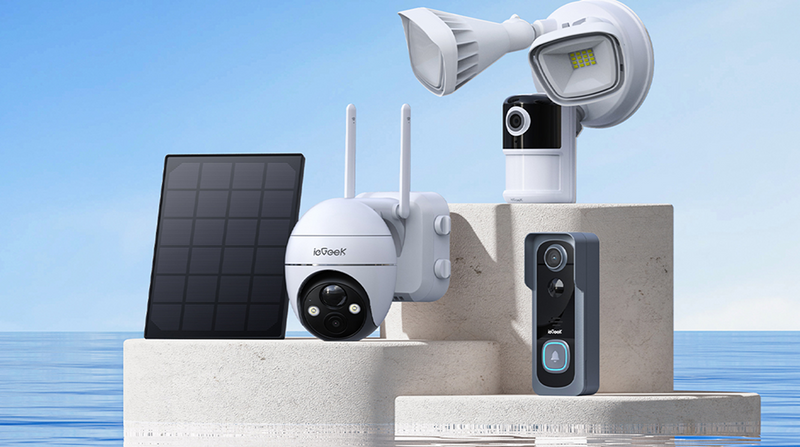
The ieGeek options below aren’t professional ANPR gate systems. They are home security cameras that can make number plates easier to see and review when installed carefully around driveways, gates, parking spaces, and small business entrances.
ieGeek ZS-GX4S 5MP Solar Security Camera
The ieGeek ZS-GX4S 5MP Solar Security Camera suits homes that need sharp video and flexible viewing across a driveway or front garden. Its 5MP resolution provides more image detail when you pause a clip to inspect a vehicle or registration plate.
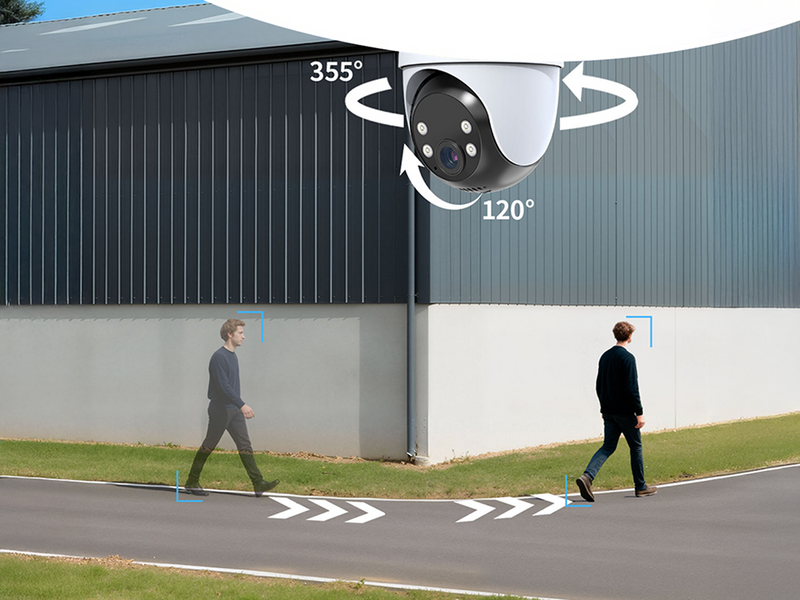
The app-controlled lens can pan 355° and tilt 120°, allowing you to adjust the view around gates, garages, and parking areas. Colour night vision reaches 33 ft (10 m), while infrared night vision extends to 50 ft (15 m). The included solar panel also supports wire-free installation in places where running a power cable would be difficult.
Key Features:
-
5MP video for clearer vehicle detail
-
355° pan and 120° tilt control
-
Colour night vision up to 33 ft (10 m)
-
Infrared night vision up to 50 ft (15 m)
-
Solar charging and rechargeable battery
-
Motion alerts and adjustable detection zones
-
Local microSD storage up to 128GB
-
IP65 weather resistance
Real-life benefit:
For a driveway, gate, or front approach, the ZS-GX4S can provide a wide view while giving you enough image detail to examine a stopped or slow-moving vehicle. It is a practical option when you need flexible coverage and simple solar-powered camera installation.
ieGeek Floodlight Camera ZY-E2
The ieGeek Floodlight Camera ZY-E2 is useful where poor lighting is the main problem. If your driveway, side entrance, or garage front becomes very dark, plates may be difficult to read because of shadows, low contrast, or headlight glare.
This model combines 5MP video with two adjustable floodlights that produce up to 2,600 lumens. The lighting can make vehicles and entrance activity clearer before you pause or enlarge the recording. Its 130° viewing angle covers a broad area, while adjustable detection zones let you focus alerts on the part of the property that matters.
Key Features:
-
5MP video resolution
-
Two adjustable 2,600-lumen floodlights
-
Colour and infrared night vision
-
Infrared range up to 50 ft (15 m)
-
130° field of view
-
Human motion detection and custom zones
-
Motion-triggered or 24/7 recording
-
Local microSD storage up to 128GB
-
Dual-band 2.4GHz and 5GHz Wi-Fi
-
IP65 weather resistance
Real-life benefit:
For a dark driveway or garage entrance, the ZY-E2 can improve the lighting around an approaching vehicle. This gives the camera a better chance of recording the vehicle colour, movement, and number plate instead of a dim outline.
ieGeek Wireless 24/7 Recording Camera S7
The ieGeek Wireless 24/7 Recording Camera S7 makes more sense when you need a longer record of activity. Motion-only recording can sometimes begin after a vehicle has already entered the frame. Continuous AOV recording provides a broader timeline to review.
The S7 records in 2K 3MP and offers 360° panoramic viewing with auto-tracking and 4× zoom. Its solar panel and 9,000mAh battery support extended outdoor monitoring. Colour night vision reaches up to 66 ft (20 m), while local storage supports microSD cards up to 256GB.
Key Features:
-
2K 3MP video
-
AOV 24/7 continuous recording
-
360° panoramic viewing
-
Auto-tracking and 4× zoom
-
Colour night vision up to 66 ft (20 m)
-
Solar charging with a 9,000mAh battery
-
Custom motion zones and app alerts
-
Local microSD storage up to 256GB
-
Cloud storage option
-
IP65 weather resistance
Real-life benefit:
For a busy entrance, larger driveway, or parking area, the S7 provides a longer record of vehicle movement. Instead of relying only on a short motion clip, you can review what happened before, during, and after the vehicle entered the area.
FAQs
What cameras can recognise number plates?
Cameras that recognise number plates are usually called LPR or ANPR cameras. They use clear imaging and software to capture and read vehicle registration numbers automatically. For home use, you may not need a professional ANPR setup. A high-resolution number plate recognition outdoor camera with suitable night vision, zoom, and placement can often record plates clearly enough for manual review.
How can I improve night-time plate recognition?
To improve night-time plate recognition, reduce glare, motion blur, and overexposure. Position the camera where headlights don’t shine straight into the lens, and keep the plate large enough in the frame. Use controlled lighting, adjust the night vision settings, and test the camera after dark. Higher resolution and zoom can also provide clearer plate detail.
Can multiple security cameras work together for better plate recognition?
Yes, several security cameras can work together for better plate capture. One camera can focus on the driveway or entrance, while another records a wider view of the vehicle and the surrounding area. This type of number plate recognition system reduces blind spots, provides more context, and increases the chance of capturing useful footage.
How do ANPR cameras work?
Auto number plate recognition cameras capture an image of a passing vehicle and locate its registration plate. Software then reads the letters and numbers and changes them into digital data. More advanced systems can store the plate with the date, time, image, and location, making the record easier to search later.
Is it legal to use ANPR cameras on private property in the UK?
Yes, you can generally use an ANPR or security camera on private property in the UK for a genuine security purpose. Aim it mainly at your own driveway, gate, or parking area. If it records a public road, pavement, shared space, or neighbouring property, data protection rules may apply. Limit the view, use privacy zones, secure the footage, and keep recordings only as long as needed.
Conclusion
A number plate recognition camera for home use doesn’t need to be a council-style ANPR system. In most cases, you simply need a camera that records clear vehicle footage, performs well at night, and sits in the right position.
Start with the problem around your property. Is the driveway too dark? Are vehicles too far from the camera? Is the mounting point too high? Does headlight glare hide the plate? Once you identify the main issue, choosing the right camera and placement becomes much easier.
Author Intro
 |
Developed by the ieGeek content team, combining hands-on experience with smart devices and insights into real user needs. ieGeek is widely known for smart security, our solutions are also designed for a variety of real-life scenarios, including travel, outdoor monitoring, pet care, and family safety. We focus on delivering simple, dependable solutions that fit seamlessly into daily life. |