

There is no specific age at which every child in the UK becomes ready to stay home alone. The law centres on risk rather than a specific birthday, so parents need to assess maturity, confidence, the length of time involved and what might happen while no adult is present.
This guide explains the legal position, indicators of readiness, practical planning, suitable trial periods and how security cameras can support — but not replace — a practical safety plan.
Key Takeaways
-
UK law does not set a specific minimum age, but parents may face legal action if leaving a child alone puts them at risk.
-
Children under 12 are rarely considered mature enough for long periods alone, and children under 16 should not be left alone overnight.
-
A first trial can start at around 15–30 minutes; after several positive brief trials, an older child may gradually move to around 2–3 hours during the day.
-
If an unfamiliar visitor arrives, the child should stay away from the door, contact the parent and never open it; if there is immediate danger, fire or a serious emergency, call 999.
-
Before leaving, parents should establish household rules, leave emergency contacts, remove medicines and other preventable hazards, and practise situations such as a smoke alarm or someone repeatedly knocking at the door.
-
Cameras can help a parent check activity around entrances; for outdoor monitoring, Bell J10 suits front-door callers, ieGeek S7 suits side entrances, gardens and approaches to the home.

Is There a Legal Age for Leaving a Child Home Alone?
What age can you leave a child home alone in the UK? UK law does not set one minimum age for leaving a child at home alone. However, a parent or guardian can face legal consequences if leaving a child unsupervised places them at risk. GOV.UK advises parents to assess the child’s maturity. Official guidance also reflects NSPCC advice that babies and very young children should never be left alone, children under 12 are rarely mature enough for long periods alone, and children under 16 should not be left alone overnight.
Age is therefore only one factor in the decision. Maturity, confidence and the ability to follow safety rules matter just as much.
How to Tell If Your Child Is Ready to Stay Home Alone
At what age can you leave a child home alone? Age is only one part of the decision, and readiness is often simpler to assess through everyday behaviour.
Willingness to Stay Home Alone
A child who feels anxious or strongly objects to the idea should not be pushed into it. A ten-minute trial while a parent stays close by can be revealing; repeated calls or clear distress suggest more time may be needed.
Following Rules Without Reminders
Home-alone rules only help if the child can follow them without an adult nearby. Think about whether they normally lock the door, avoid restricted appliances and respond when you contact them. Repeatedly forgetting simple safety instructions is a sign they may not yet be ready.
Responding to Unexpected Situations
Ask what they would do if the smoke alarm sounded, someone knocked repeatedly or they suddenly felt ill. If security cameras are used around the home, the child should know they do not need to investigate outdoor activity themselves. They should know when to call you, another trusted adult or 999.

How Long Can a Child Be Left Alone?
There is no statutory timetable linking a specific age to a set number of hours. Duration should increase only after brief trials have gone well.
A Short Trip to the Shops
For a first trial, around 15 to 30 minutes can be a sensible starting point, with the parent remaining nearby and able to return quickly. A brief, predictable absence makes it easier to see how the child copes alone without leaving them for too long at the outset.
Several Hours During the Day
For an older child who has already handled shorter periods alone several times, around two to three hours during the day may be a sensible next step. A clear return time, consistent contact with the parent and a trusted adult nearby are especially important if the parent will be away for longer.
Staying Home Alone Overnight
An overnight stay should be considered separately rather than as the next step after a few extended daytime trials. The child would be alone for many more hours, including while asleep, so it demands greater independence and a trusted adult nearby if help is needed.
How to Prepare a Child for Being Home Alone
Before the initial home-alone trial, the child should already understand the household rules, who to contact and what to do if something unplanned happens.
Set Clear Household Rules
Agree what the child may cook, which appliances are not permitted, whether friends may visit and what to do when someone comes to the door. If the home uses front door security cameras, the child should still follow the agreed rule for unexpected visitors. Clear rules reduce the need for challenging decisions while they are alone.
Create an Emergency Contact Plan
Keep essential contacts somewhere simple to find:
- Parent or carer numbers
- One nearby trusted adult
- Another family contact
- 999 for emergencies
- The home address
The child should know which situations require an emergency call and which can wait for a parent or trusted adult.
Remove Avoidable Safety Risks
Basic burglary prevention starts with checking doors and windows. Store medicines and sharp tools, and keep unsafe cleaning products out of reach. Food should be available that the child can prepare safely without using equipment they are not comfortable handling.
Practise Common Situations
A few rehearsals can expose weak points. Ring the doorbell while the child stays inside, ask what they would do if they smelled smoke, or pretend your phone is briefly unavailable.
How Security Cameras Can Support a Safe Trial
Household rules and an emergency plan remain the basis of a home-alone trial. Outdoor security cameras can provide another layer of awareness by helping parents monitor visitors and activity around entrances without asking the child to investigate.

Handle Visitors Without Opening the Door
Where unexpected callers are the main concern, a video doorbell can help a parent view the entrance and respond remotely. The ieGeek Bell J10 video doorbell uses AI human detection, a broader viewing angle and enhanced night vision to help a parent see who is at the door. Two-way audio lets the adult reply remotely, while local and cloud storage offer options for keeping door events.
These features do not change the child's rule: do not open the door to an unexpected visitor. Parents should also allow for the possibility that a notification or remote reply may be delayed. The child’s rule should remain simple: do not open the door to an unexpected visitor, even if the person gives a plausible reason.
Detect Someone Approaching the Home
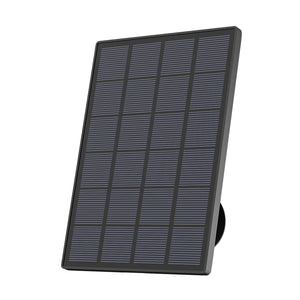
Activity around a side gate, front garden or driveway may be harder to understand from a single doorway view. The ieGeek S7 wireless 24/7 recording camera combines 4MP video with Wi-Fi, AOV 24/7 recording, PTZ coverage and tracking, helping preserve more of the activity before and after someone approaches the property. Solar power also supports longer outdoor use.
If a parent sees someone approaching the home, the child should already know to stay away from the door, contact the parent and follow the agreed safety plan.
Improve Safety Around a Dark Driveway
A poorly lit drive or garage approach can make it difficult for a parent to see who is outside, particularly when a child is home alone in the late afternoon or evening. The ieGeek ZY-E2 floodlight camera combines high-resolution video with a 2600-lumen floodlight, human detection, a 110dB siren and 24/7 recording. Its hardwired design is better suited to homes with permanent outdoor power and a larger entrance area.
The floodlight provides a clearer view of people approaching through the driveway, while the siren can provide an additional warning if suspicious activity is detected. This allows the parent to assess what is happening outside without asking the child to go to a window, garage or entrance to check for themselves.

When a Child Should Not Be Left Home Alone
A child should not be left home alone if they are frightened by the idea, cannot consistently follow safety rules or do not know how to contact an adult in an emergency. The same applies if they are likely to open the door to strangers, use dangerous appliances without permission or struggle to remain calm when something unexpected happens.
Leaving a child alone is also less appropriate when they would be responsible for a younger sibling or when no trusted adult could reach the home quickly if help were needed. In these situations, another form of supervision is the safer option.
Before You Leave: A Final Check
- The child says they feel comfortable and knows exactly when you will return.
- Their phone is charged, the sound is on and they can contact you and a nearby trusted adult.
- The full home address and emergency contacts are clearly displayed.
- Ready-to-eat food and water are available, and restricted appliances are understood.
- Medicines, alcohol, sharp tools, matches, lighters and cleaning products are secured.
- Doors and windows are secure, and the child knows not to open the door.
- The safety plan still works if a camera, Wi-Fi connection or phone alert fails.
FAQs
Can you leave an 8-year-old home alone for 20 minutes?
There is no law that automatically makes a 20-minute absence unlawful because a child is eight. However, official guidance says children under 12 are rarely mature enough for long periods alone. At eight, adult supervision is generally the safer choice if there is any doubt about the child’s ability to cope.
Can a 10-year-old look after a 7-year-old?
There is no simple legal age rule for sibling babysitting, but leaving a younger child with a 10-year-old increases the responsibility significantly. The parent remains responsible for ensuring both children are safe, and a 10-year-old may not be able to manage an emergency involving a younger sibling.
How long can I leave an 11-year-old at home?
There is no set legal number of minutes or hours. Because children under 12 are generally considered unlikely to be ready for long periods alone, an 11-year-old should not automatically be left for several hours. Any trial should be short, daytime-based and matched to the child’s maturity.
Can social services become involved if a child is left alone?
Yes. If someone believes a child is at risk of neglect or harm, they can report the concern to the local children’s social care team. The service may gather more information, ask a social worker to assess the situation or involve the police if there is immediate risk.
Should a child have a phone before staying home alone?
They should have a reliable way to contact a parent, trusted adult or emergency services. A mobile phone is often the easiest option, but the key point is that the child knows how to use it and can state the home address if emergency services ask.
Conclusion
There is no set legal age for leaving a child home alone in the UK. A safer approach is to assess readiness through maturity, willingness, rule-following and the ability to handle problems, then begin with a brief daytime trial and build up gradually. Cameras and outdoor lighting can improve awareness around the home, but appropriate supervision and preparation remain more important.
About the Author
 |
Written by the ieGeek team, a brand dedicated to making smart security simple and accessible for everyone. With experience in designing easy-to-install security cameras, we aim to provide practical advice based on real user scenarios. Our goal is to provide reliable, easy-to-use technology that helps users stay connected and protected in different environments. |